India shares land borders with several neighbouring countries, including Bangladesh, Nepal, Bhutan, Pakistan, China and Myanmar. These borders support the movement of goods, regional commerce and international connectivity. Land ports and border customs facilities play an important role in managing this movement.
For exporters, importers, manufacturers and wholesale businesses, choosing the right land port can affect transportation costs, customs clearance, delivery schedules and access to overseas markets.
Some of India's major land ports and border trade points include Petrapole, Raxaul, Jogbani, Attari, Agartala, Moreh and Dawki. These facilities serve different border routes and have different levels of infrastructure and permitted commercial activity.
In this guide, we explore 10 major land ports and border trade points in India, their locations, neighbouring countries, trade importance and relevance to businesses involved in cross-border commerce.
What Is a Land Port?
A land port is a designated border facility where goods and, where applicable, passengers cross an international land border. It may provide facilities for customs clearance, cargo inspection, immigration, warehousing, transport and other border-related procedures.
Land ports help governments regulate international trade while supporting the movement of goods between neighbouring countries. In India, two important terms are commonly used:
- Integrated Check Post (ICP): A facility that brings several border-related functions, such as customs, immigration, security and cargo handling, together at a designated location.
- Land Customs Station (LCS): A designated customs location where eligible goods can be cleared for import or export, subject to applicable rules and permitted trade arrangements.
An ICP and an LCS are not necessarily the same. Facilities and cargo permissions differ by location, so businesses should verify the applicable arrangements before selecting a border crossing.
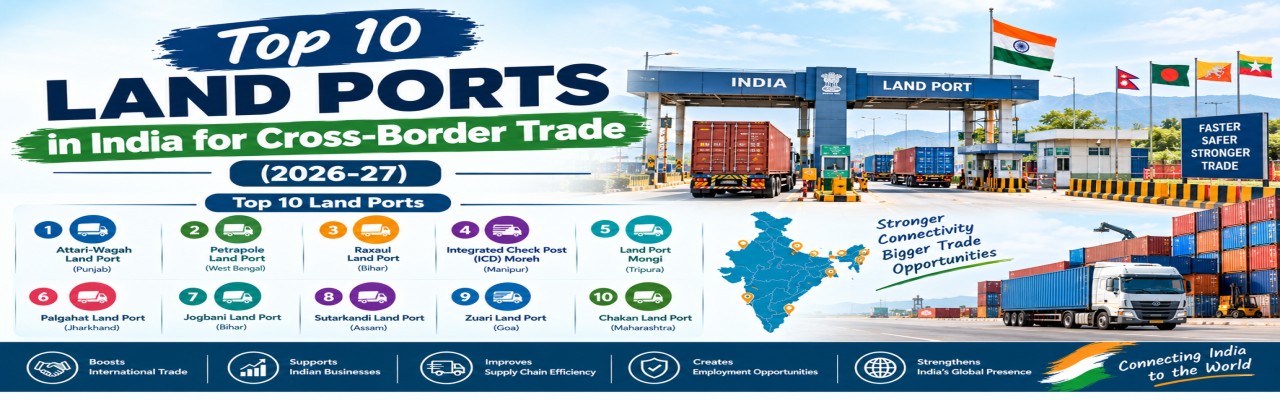
Top 10 Land Ports in India
The following list covers major Indian land ports and border trade points that are relevant to cross-border commerce. It is not a strict ranking based on cargo volume, revenue or annual trade value.
1. Petrapole Land Port, West Bengal
Neighbouring country: Bangladesh
Petrapole, located in West Bengal's North 24 Parganas district, is one of India's most important land ports for trade with Bangladesh. It is located opposite the Benapole border point in Bangladesh and forms part of a major cross-border road trade corridor.
The Petrapole Integrated Check Post supports customs-related processes and the movement of eligible cargo between the two countries. Its infrastructure is important for businesses transporting goods by road across the India–Bangladesh border.
Petrapole is relevant to exporters and importers dealing in products such as textiles, agricultural goods, industrial materials and other permitted merchandise. The actual products allowed and the applicable procedures depend on current bilateral trade arrangements and customs rules.
Why it matters for businesses:
- Connects Indian suppliers with Bangladesh's market.
- Supports cross-border road freight and cargo clearance.
- Provides an important route for businesses trading with neighbouring South Asian markets.
- Can be relevant to manufacturers, wholesalers and agricultural exporters.
Businesses should confirm current border operations, cargo permissions, documentation and waiting times before dispatching a shipment.
2. Raxaul Land Port, Bihar
Neighbouring country: Nepal
Raxaul, located in Bihar's East Champaran district, is a major trade gateway between India and Nepal. It connects with Birgunj on the Nepalese side, an important centre for Nepal's international trade and logistics.
The Raxaul Integrated Check Post supports the movement and clearance of eligible goods between the two countries. The wider Raxaul–Birgunj corridor is significant because Nepal is landlocked and relies on transit routes through neighbouring countries for much of its international merchandise trade.
Indian businesses supplying consumer goods, construction materials, machinery, industrial products and other permitted merchandise may find this route relevant when serving Nepalese buyers.
Why it matters for businesses:
- Connects Indian manufacturers and wholesalers with Nepal.
- Supports road-based cargo movement and customs procedures.
- Provides access to an important regional trade corridor.
- Can be useful for businesses that regularly supply Nepalese importers and distributors.
- Exporters should check the relevant customs requirements, transit arrangements and product-specific restrictions before choosing this route.
3. Jogbani Land Port, Bihar
Neighbouring country: Nepal
Jogbani is located in Bihar's Araria district, near the Nepal border. It connects with Biratnagar in Nepal and supports trade and cross-border movement between the two countries.
The Jogbani Integrated Check Post is relevant to businesses operating in eastern Bihar and nearby regions that trade with Nepal. The route can provide an alternative to other India–Nepal border crossings, depending on the shipment's origin, destination and cargo eligibility.
The types of goods that can be moved through the crossing depend on the applicable customs and trade arrangements.
Why it matters for businesses:
- Provides another road trade connection between India and Nepal.
- Can serve suppliers and buyers in Bihar and surrounding areas.
- Supports regional commerce and cross-border logistics.
- May be considered when comparing routes, transport costs and delivery schedules.
- Before selecting Jogbani, businesses should confirm that the facility is authorised to handle their specific cargo and that the necessary customs and transport services are available.
4. Agartala Land Port, Tripura
Neighbouring country: Bangladesh
Agartala, the capital of Tripura, is an important border city in India's northeastern region. The Agartala Integrated Check Post connects India with Bangladesh through the Akhaura border point.
Its location is particularly significant because Bangladesh borders several northeastern Indian states. Cross-border connectivity can support the movement of eligible goods and improve access to regional markets.
For businesses in Tripura and nearby northeastern states, Agartala can be relevant when evaluating trade routes with Bangladesh. Depending on current arrangements, the wider India–Bangladesh transport network also has implications for regional logistics and connectivity.
Why it matters for businesses:
- Connects Tripura with Bangladesh.
- Supports eligible cross-border cargo movement.
- Offers a regional trade route for businesses in northeastern India.
- Can be relevant to suppliers seeking access to nearby Bangladesh markets.
- Exporters should verify current operating conditions, the commodities permitted through the crossing and the availability of suitable transport and customs facilities.
5. Dawki Landport, Meghalaya
Neighbouring country: Bangladesh
Dawki is located in Meghalaya's West Jaintia Hills district, close to the Bangladesh border. It is an important border crossing for regional trade and connectivity between Meghalaya and Bangladesh.
The Dawki Integrated Check Post was developed to support border-related functions and improve facilities for eligible cross-border movement. The location is also known for its scenic surroundings, but its commercial importance comes from its position along the India–Bangladesh border. For exporters and importers, Dawki may be relevant when evaluating trade routes connecting Meghalaya and nearby areas with Bangladesh.
Why it matters for businesses:
- Provides a border connection between Meghalaya and Bangladesh.
- Supports regional trade and cross-border connectivity.
- May be useful for eligible goods moving through northeastern India.
- Offers an additional route to consider when comparing logistics options.
- The availability of cargo-handling services and permitted products should be checked before finalising a shipment.
6. Srimantapur Land Port, Tripura
Neighbouring country: Bangladesh
Srimantapur is a border trade point in Tripura that connects India with Bangladesh. It is relevant to regional commerce and cross-border transport in the northeastern part of the country. The crossing can be considered by businesses looking for trade routes between Tripura and Bangladesh, subject to the applicable customs procedures and operational arrangements.
For small and medium-sized enterprises, border access can be an important factor when identifying nearby export markets. However, the suitability of a particular route depends on the cargo, road connectivity, handling facilities and delivery requirements.
Why it matters for businesses:
- Connects Tripura with Bangladesh.
- Supports regional cross-border trade where permitted.
- Can be considered when evaluating routes for eligible cargo.
- Contributes to India's broader border connectivity network.
- Businesses should confirm current cargo permissions, customs services and operational status before treating Srimantapur as a suitable route for commercial shipments.
7. Sutarkandi Land Port, Assam
Neighbouring country: Bangladesh
Sutarkandi is located in Assam's Karimganj district, near the Bangladesh border. It is a recognised border trade point in the Barak Valley region and is relevant to commercial connectivity between southern Assam and Bangladesh.
Its location may be useful for businesses evaluating trade routes in the northeastern region. The suitability of Sutarkandi for a particular shipment depends on the products being transported, applicable trade arrangements and the facilities available at the crossing.
Why it matters for businesses:
- Connects southern Assam with Bangladesh.
- Supports regional trade and border connectivity.
- May provide a route option for eligible cross-border cargo.
- Can be relevant to businesses comparing transport routes within northeastern India.
- Exporters should check current customs procedures, road conditions, permitted commodities and border operating arrangements before booking transport.
8. Attari Land Port, Punjab
Neighbouring country: Pakistan
Attari is located in Punjab near Amritsar and is one of India's best-known border crossing points with Pakistan. The Attari Integrated Check Post was developed to facilitate border-related procedures and eligible cross-border movement.
However, businesses must distinguish between the existence of border infrastructure and the availability of commercial trade. India suspended trade with Pakistan in 2019, and Attari should not be presented as a normal, currently available route for routine commercial exports or imports without verifying the latest official position.
For this reason, Attari is important in discussions of India's land-border infrastructure and historical trade connectivity, but businesses should not assume that shipments can currently be sent through it.
Why it matters for businesses:
- It is a significant border infrastructure location between India and Pakistan.
- Has historically been associated with cross-border trade and transport.
- Illustrates how diplomatic and policy changes can affect commercial routes.
- Before planning any shipment, businesses must confirm whether the relevant trade is legally permitted and whether the required border and customs operations are available.
9. Moreh Land Port, Manipur
Neighbouring country: Myanmar
Moreh, located in Manipur's Tengnoupal district, is an important border town connecting India with Myanmar. It has strategic relevance for regional trade and India's wider connectivity with Southeast Asia.
The Moreh Integrated Check Post was developed to support border procedures and cross-border movement. However, the security situation in Myanmar and changing border arrangements can affect the practical availability of trade routes.
Businesses should therefore avoid assuming that all cargo movements through Moreh are operating normally. The current security situation, customs permissions, transport access and applicable government restrictions must be checked before any commercial shipment is planned.
Why it matters for businesses:
- Connects northeastern India with Myanmar.
- Has strategic relevance to regional connectivity with Southeast Asia.
- May be important for eligible cross-border trade when permitted and operational.
- Requires particular attention to current security and border conditions.
- For exporters, the route should be evaluated only after confirming current official guidance and the feasibility of moving the intended goods.
10. Darranga Land Port, Assam
Neighbouring country: Bhutan
Darranga is located in Assam near the Bhutan border and is associated with the India–Bhutan border connectivity network. The location is relevant to regional commerce and the movement of eligible goods between India and Bhutan.
Land border facilities along the India–Bhutan frontier support trade under the two countries' applicable arrangements. The exact functions and services available at an individual crossing depend on its designation, operating status and customs permissions. Businesses supplying Bhutanese buyers may consider the relevant border route when comparing transport options from Assam and other nearby regions.
Why it matters for businesses:
- Provides a border connection relevant to India–Bhutan trade.
- Supports regional connectivity where commercial movement is permitted.
- Can be considered when assessing suitable transport routes for eligible goods.
- May be relevant to suppliers and distributors serving the Bhutanese market.
- Before dispatching goods, exporters should verify the current status of the crossing, authorised cargo categories and customs requirements.
Major Land Ports in India by Neighbouring Country
India's land-border trade network connects the country with several neighbouring markets. The following overview helps businesses understand which crossings may be relevant to their trade plans.
|
Neighbouring country |
Major Indian land ports and border trade points |
|
Bangladesh |
Petrapole, Agartala, Dawki, Srimantapur and Sutarkandi |
|
Nepal |
Raxaul and Jogbani |
|
Pakistan |
Attari, subject to current trade restrictions |
|
Myanmar |
Moreh, subject to current security and operational conditions |
|
Bhutan |
Darranga and other designated border trade points |
This table is an overview, not a complete list of all Indian land ports or Land Customs Stations. The locations differ in their legal designation, infrastructure, permitted cargo and current operating conditions.
Importance of Land Ports in India's International Trade
Land ports are important because they provide physical connections between India and neighbouring countries. They help businesses move goods across borders and support trade in regions where road transport can be practical.
1. Support Cross-Border Trade
Land ports connect exporters and importers with neighbouring markets. They provide designated locations for customs procedures and other required border formalities.
For example, Petrapole is important for India–Bangladesh trade, while Raxaul and Jogbani are relevant to trade with Nepal.
2. Help Manage Customs Clearance
Customs procedures help authorities verify declarations, assess applicable duties and taxes, check compliance and regulate the movement of goods. The facilities available at each crossing differ. Exporters should confirm the procedures and documentation required for their particular product and destination.
3. Provide Access to Regional Markets
Businesses may use land ports to reach buyers in nearby countries without relying entirely on sea or air freight. For eligible goods, road-based routes can be useful for regional deliveries. Whether they are cheaper or faster depends on distance, border delays, transport availability, cargo type and other logistics costs.
4. Support Regional Economic Activity
Border trade can create business opportunities for transport companies, customs brokers, warehouses, wholesalers and local service providers. It can also help manufacturers and agricultural suppliers reach buyers in neighbouring countries.
5. Strengthen Regional Connectivity
Land ports form part of wider transport and trade networks. Their effectiveness depends not only on the border facility but also on road infrastructure, customs coordination, transport services and agreements between countries.
Documents Required for Exporting Goods Through Indian Land Ports
The documents required for an export shipment depend on the product, destination country, transaction type and applicable regulations. Common documents may include the following.
1. Commercial Invoice
A commercial invoice records details such as the seller, buyer, product description, quantity, price and transaction value. It is a key document for customs and commercial purposes.
2. Packing List
A packing list describes how the goods are packed, including the number of packages and relevant weight or measurement details.
3. Shipping or Transport Document
The appropriate transport document depends on the mode of transport and the arrangements used for the shipment. Road cargo may require a road consignment or transport document.
4. Customs Export Declaration
Exporters must complete the applicable customs declaration and follow the procedures required for the goods and border crossing.
5. Certificate of Origin
A certificate of origin may be required by the buyer, customs authorities or the applicable trade arrangement. It identifies the country of origin of the goods and may be relevant when claiming preferential tariff treatment, where available.
6. Product-Specific Permits or Certificates
Certain goods require additional licences, certificates or approvals. Examples may include agricultural products, food items, pharmaceuticals, chemicals and regulated industrial goods.
Depending on the product and destination, requirements may include health or phytosanitary certificates, testing documents or other regulatory approvals.
Important: This is a general checklist, not a universal list. Exporters should confirm the current requirements with Indian Customs, the relevant authorities in the destination country and a qualified customs or logistics professional.
How to Choose the Right Land Port for Exporting Goods
Choosing a suitable land port is an important part of export planning. The nearest crossing may not always be the best option if it lacks the necessary facilities or is not authorised to handle the goods. You need to consider the following factors before choosing a route.
1. Destination Country and Buyer Location
Start by identifying the buyer's location and the destination country's available trade routes. A route that works well for a buyer in Bangladesh may not be suitable for a buyer in Nepal.
2. Permitted Cargo
Check whether the chosen crossing can handle the type of goods you plan to export. Some products may face restrictions, special inspection requirements or additional permits.
3. Customs and Inspection Facilities
Confirm that the crossing has the customs and cargo-handling services required for your shipment. Not every border point offers the same infrastructure.
4. Transportation Costs
Compare the total logistics cost, including road freight, loading, unloading, handling, storage, customs-related expenses and any transit charges. A shorter route is not automatically the least expensive option.
5. Delivery Time and Border Delays
Border congestion, inspection requirements, operating hours and security conditions can affect delivery schedules. Ask your logistics provider for current information rather than relying on general estimates.
6. Product Regulations
Some products require specific certificates, testing or import permissions in the destination country. Confirm these requirements before arranging transport.
7. Current Operational Status
Border arrangements and permitted trade can change because of government policy, security conditions or diplomatic developments. Verify the current position before dispatching goods.
How TradeMart Can Help Businesses Find Trade Opportunities?
For manufacturers, exporters, wholesalers and importers, identifying suitable buyers and suppliers is an important part of cross-border business development.
- A B2B platform such as TradeMart can help businesses explore product categories, discover potential suppliers and connect with companies involved in international trade.
- Before finalising a transaction, businesses should independently verify supplier credentials, product specifications, certifications, pricing, payment terms and shipping arrangements.
- A successful export transaction requires more than finding a buyer. It also depends on selecting the right transport route, preparing the correct documents and meeting the destination country's import requirements.
Conclusion
Land ports play an important role in India's cross-border trade by connecting businesses with neighbouring markets and supporting the movement of eligible goods. Petrapole, Raxaul, Jogbani, Agartala, Dawki and other border trade points serve different routes and commercial needs.
For exporters and importers, the best land port depends on the destination, product category, customs requirements, transport costs and current border conditions. Businesses should verify the operational status and permitted cargo at the selected crossing before dispatching a shipment.
By understanding India's land-border trade network, businesses can make better-informed decisions about transport routes, documentation and international sourcing. Platforms such as TradeMart can also help companies discover potential suppliers and buyers as they explore cross-border trade opportunities.