The top B2B marketplace in India can uplift your B2B business’s growth. Online B2B marketplaces have revolutionized the B2B industry. Earlier, conventional B2B buying and selling took a lot of time and effort. But online B2B marketplaces have quickly changed the industry dynamic with fast-acting methods and strong results. Online marketplaces offer countless benefits, like verified buyer inquiries.
So, how do the top B2B marketplaces in India connect manufacturers, wholesalers, and MSMEs? B2B TradeMart, IndiaMart, Trade India, ExportersIndia, etc. offer many perks. This blog covers the top 10 B2B websites in India, the benefits and challenges of the top B2B marketplace in India, and the future opportunities they offer.
What is a B2B Marketplace?
A B2B marketplace is an online business-to-business platform where buyers and sellers connect and perform trade. In B2B marketplaces, companies buy and sell products and services exclusively in the B2B sector. In simple terms, B2B marketplaces are like Amazon or eBay, but for wholesale buying and selling. These platforms manage corporate trade, especially bulk purchasing and complex supply chain management.
How B2B Marketplaces Work?
Unlike regular B2C and D2C marketplaces, where individual buyers purchase a single product, a B2B marketplace is for bulk orders. Here, manufacturers, wholesalers, distributors, retailers, and suppliers connect to buy and sell in bulk. Offline or manual negotiations are ineffective in B2B marketing because these businesses require back-and-forth emails, spreadsheets, and digital tools to streamline trade.
Top 10 B2B Marketplaces in India
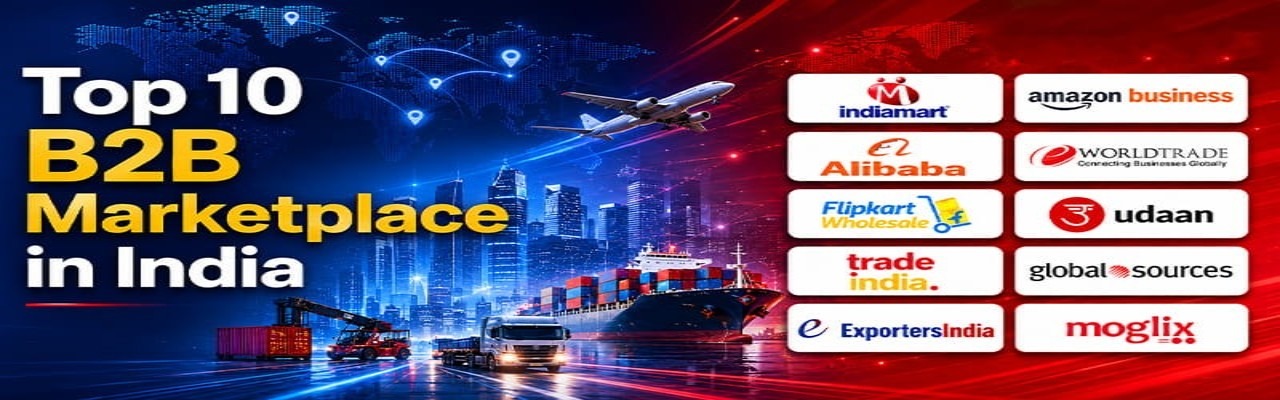
The following are the top 10 B2B marketplaces in India:
IndiaMART
IndiaMART is one of India's top B2B portals and the largest and most popular e-commerce marketplaces for trading goods and services online in India. The platform has dominated the market for decades, and much of that success is due to its dedicated tools designed for MSMEs. IndiaMART has connected over 60 lakh suppliers and buyers across 50+ industries. The platform is among the successful B2B sites in India due to the following reasons:
Key Features:
Large Network - IndiaMART has an excellent track record of drawing businesses and verified leads.
Small City Growth - The platform is unlocking entrepreneurial opportunities across India, especially in small Indian cities that serve as lifelines for regional businesses.
Verified Platform - The platform is building trust among users in the B2B industry. They offer verified badges and Trust Seal certificates to ensure the authenticity of buyers and suppliers after thorough background checks.
Detecting Buyer Requirements - The platform uses algorithms to detect buyers’ requirements and connect them with suppliers who can deliver the best results.
Target Audience:
Manufacturers
Suppliers
Wholesalers
Distributors
Exporters
Service providers
MSMEs
Retailers
Bulk buyers
TradeIndia
TradeIndia is a well-established B2B marketplace that has a robust ecosystem of buyers and suppliers. Millions of MSMEs and large organizations have joined the platform to deal in 1 Lakh+ product categories. In addition, top B2B companies in India trust TradeIndia to manage their business networking, buyer leads, digital marketing, and website management. What’s more?
Key Features:
TradeIndia is a leading name in wholesale marketplaces thanks to its expansive user base. With millions of registered businesses, the platform generates numerous business opportunities.
The platform offers comprehensive solutions, including customized listings, online catalogs, secure transactions, and dedicated payment & account management systems.
TradeIndia hosts and organizes trade events to offer both online and offline exposure to new and existing businesses. At these events, businesses showcase their products and services in person and virtually, and highlight their brand’s uniqueness in a competitive market.
The platform fosters a secure, reliable environment with verified business listings and legitimate ratings.
Target Audience:
Manufacturers
Exporters
Importers
Wholesalers
Distributors
MSMEs
Industrial buyers
Service providers
ExportersIndia
ExportersIndia is known for its massive network of global buyers and suppliers. The platform helps MSMEs gain global exposure by increasing visibility and connecting businesses for mutually beneficial opportunities.
Key Features:
Millions of verified buyers and suppliers promote a vast network. By joining ExportersIndia, businesses get instant recognition in the global marketplace.
Get dedicated support for the business’s growth through inquiry tools, lead generation, and international trade navigation.
Highlight your business authenticity indicators like certifications, product portfolios, awards, and other comprehensive profiles for competitive advantage.
An SEO-friendly business model gives your business organic exposure and better rankings in top search engines.
Target Audience:
Exporters
Manufacturers
International suppliers
Importers
Wholesalers
Trading companies
MSMEs
Global buyers
Amazon Business
Amazon Business is a popular B2B marketplace in India that combines e-commerce convenience with technical expertise. Because the marketplace offers a familiar experience, procurement tools are easy an use for corporate buying and selling. The platform allows businesses to streamline operations.
Key Features:
Tax & compliance solutions that enable businesses to list GST-enabled products, easily download invoices, and claim tax credits for bulk sales.
The platform controls corporate purchasing, including spending limit management, purchase customization, expense adjustments, and approval workflows.
Unlock bulk discounts and get better pricing on large orders or frequent buying.
Amazon is a reliable name that ensures fast logistics through its doorstep delivery service.
Target Audience:
Offices
Startups
Corporations
Schools
Hospitals
Government organizations
Retailers
Small businesses
Institutional procurement teams
Alibaba India
Alibaba India is one of the top 10 B2B portal in India that connects MSMEs with international buyers. The platform promotes cross-border trade and opens countless export opportunities. That’s why it is the best b2b portal for export business in India.
Key Features:
International Supplier Network: Buyers can discover suppliers from multiple countries and manufacturing hubs.
Global Product Categories: The platform covers machinery, electronics, textiles, packaging, consumer goods, industrial products, raw materials, and numerous other categories.
Supplier Verification: Alibaba provides supplier-related verification and assessment features to help buyers evaluate potential business partners.
Trade Assurance: Eligible transactions can use Alibaba's Trade Assurance mechanism, subject to applicable terms and conditions.
RFQ & Inquiry Tools: Buyers can submit requirements and receive quotations from suppliers.
Customization: Many manufacturers offer OEM/ODM and private-label production options.
International Sourcing: Businesses can compare international suppliers, specifications, minimum order quantities, and quotations.
Target Audience:
Importers
Exporters
Manufacturers
Wholesalers
Private-label businesses
Distributors
International sourcing companies
Large-scale buyers
Flipkart Wholesale
To simplify bulk procurement, Flipkart Wholesale is a popular choice. The portal offers competitive prices and a diverse product catalog across several niches, including grocery, apparel, electronics, consumer goods, and more.
Key Features:
Bulk Procurement: Businesses can place larger orders across multiple product categories.
Competitive Pricing: Wholesale-oriented pricing can make bulk procurement more economical for eligible buyers.
Wide Product Range: Categories can include grocery, general merchandise, apparel, consumer products, and other retail-oriented products.
Digital Ordering: Retailers can browse products and place orders digitally.
Retailer-Focused Model: The platform is designed around business buyers rather than ordinary household shoppers.
Supply Chain Support: Digital procurement can reduce retailers' reliance on traditional wholesale channels.
Target Audience:
Kirana stores
Retailers
Small businesses
Resellers
Local merchants
Wholesale buyers
B2B TradeMart
B2B TradeMart is a trending B2B portal in India that connects MSMEs, large enterprises, wholesalers, and verified suppliers to streamline wholesale and corporate trade. It is a centralized hub for B2B buyers and sellers to scale their business with reduced marketing expenses and safe transactions. With B2B TradeMart, businesses can get several benefits, like:
Key Features:
Secure Platform - B2B TradeMart prioritizes security by verifying business profiles and ensuring the authenticity of both buyers and suppliers. This keeps the platform safe by significantly reducing the risk of fraud and non-verified leads.
Wider Business Reach - B2B TradeMart is a B2B portal that lets businesses display their profiles and product catalogs 24/7. This way, whether you belong to the manufacturing, wholesaling, or MSMEs business, you can expand your business’s reach to a wider audience.
User-Friendly Interface - B2B TradeMart offers a user-friendly interface thanks to its AI-based recommendations and advanced filters. These filters help in creating a personalized layout for businesses. As a result, sellers can use the data-driven insights and analytics to optimize their pricing and business listings.
Seamless Operation - B2B TradeMart has an integrated trade cycle that includes communication tools and an inquiry system, streamlining operations seamlessly.
Target Audience:
Manufacturers
Wholesalers
Distributors
Exporters
Importers
MSMEs
Retailers
Corporate buyers
Bulk purchasers
Udaan
Udaan is a revolutionary marketplace that empowers the MSMEs engaged in B2B buying and selling. The platform has eliminated supply chain intermediaries and offers highly competitive wholesale prices.
Key Features:
Digital Wholesale Procurement: Retailers can discover and purchase products digitally.
Retailer-Focused Marketplace: The platform is particularly relevant to small retailers and local businesses.
Competitive Wholesale Pricing: Bulk and business-oriented purchasing can provide retailers with competitive prices.
Multiple Product Categories: The platform has operated across categories such as FMCG, electronics, lifestyle products, and other retail merchandise.
Supply Chain Support: Technology can help coordinate procurement, logistics, and seller-buyer interactions.
Business Financing: Udaan has also developed financial services and credit-related offerings for eligible business users.
Local Market Reach: The platform is designed to connect brands and suppliers with retailers across India's fragmented retail ecosystem.
Target Audience:
Kirana stores
Retailers
Small businesses
Brands
Wholesalers
Manufacturers
Distributors
JioMart Partner
JioMart Partner offers bulk discounts to the neighborhood kiranas, hotels, and local small businesses. In addition, digital procurement, door-to-door delivery, and the elimination of wholesalers help streamline business processes on this platform.
Key Fetaures:
Digital Procurement: Retailers can use digital channels to source products.
Wholesale-Oriented Purchasing: Businesses can purchase products in quantities suitable for their operations.
Product Variety: The broader JioMart ecosystem spans grocery, FMCG, consumer goods, electronics, and other categories.
Retailer Support: The model is focused on helping small and neighborhood businesses improve procurement efficiency.
Delivery & Supply Chain: Digital ordering can make inventory replenishment more convenient.
Reliance Ecosystem: The platform benefits from the broader infrastructure and retail presence of the Reliance ecosystem.
Target Audience:
Kirana stores
Neighborhood retailers
Small businesses
Hotels
Restaurants
Local merchants
Institutional buyers
Moglix
Moglix offers a reliable business experience that is similar to Amazon’s. The digital fragmentation, industrial supply chain, and MSME-centric practices make it a suitable B2B portal in India.
Key Features:
Industrial Product Catalog: Moglix offers products across tools, electrical equipment, safety gear, hardware, office supplies, cleaning products, and industrial consumables.
Business Procurement: Organizations can use the platform to source products required for regular operations.
Bulk Purchasing: Businesses can place larger orders and source multiple products through one procurement channel.
Enterprise Solutions: Procurement tools can help larger organizations manage business purchasing.
Product Discovery: Businesses can compare specifications, brands, and prices across product categories.
Supply Chain Support: Moglix combines digital commerce with logistics and industrial supply-chain capabilities.
MSME-Friendly Approach: Smaller businesses can also use the platform to source industrial and operational supplies.
Target Audience:
Manufacturers
Factories
Construction companies
Contractors
Industrial buyers
MSMEs
Procurement departments
Offices
Maintenance teams
Large enterprises
Comparison Table of Top B2B Marketplaces in India
Below is the comparison table for the top B2B marketplaces in India:
Platform
Best For
Industry
Pricing
App Available
Export Support
B2B TradeMart
Manufacturers, suppliers, wholesalers
Multi-industry
Free listing + paid promotional plans
Yes
Moderate export support
IndiaMART
MSMEs, manufacturers, wholesalers
Multi-industry
Free basic listing / Paid premium plans
Yes
Limited international support
TradeIndia
Exporters and industrial suppliers
Industrial goods, textiles, machinery
Free + subscription plans
Yes
Strong export-import support
ExportersIndia
Small exporters and MSMEs
Handicrafts, agriculture, and engineering
Free + premium membership
Yes
Dedicated export support
Amazon Business
Corporate and bulk purchasing
Office supplies, FMCG, electronics
Free buyer account; seller fees apply
Yes
Moderate export capabilities
Alibaba India
Global exporters and manufacturers
Multi-industry
Free registration; paid supplier packages
Yes
Excellent global export support
Flipkart Wholesale
Retailers and resellers
Grocery, fashion, electronics
Free registration
Yes
No major export support
Udaan
Kirana stores, retailers, distributors
FMCG, lifestyle, electronics
Free registration
Yes
Minimal export focus
JioMart Partner
Grocery retailers and small shops
FMCG, grocery
Free registration
Yes
No export support
Moglix
Industrial and B2B procurement
Manufacturing, tools, safety equipment
Custom enterprise pricing
Yes
Limited export support
How to Choose the Right B2B Marketplace?
Trust, relevance, and scalability are the 3 core values that ensure a B2B marketplace's credibility. Choosing the top 10 B2B websites in India is based on your business goals, target audience, budget, and industry type. To select the best marketplace, top B2B companies do the following things:
Identify their business needs
Check the industry relevance
Compare prices and membership plans
Analyze buyer traffic and global reach
Look for international trade and export opportunities
How easy and manageable is the platform
Evaluate the platform’s reviews and success stories
Check if the platform is reliable
For Manufacturers
A platform that offers bulk lead generation, business expansion opportunities, and verified suppliers is ideal for manufacturers. TradeIndia, IndiaMART, B2B TradeMart, Alibaba India, etc., efficiently connect manufacturers with wholesalers, suppliers, and bulk buyers globally.
For Retailers
For retailers, an ideal platform must offer competitive pricing, quick & easy purchasing, fast delivery, inventory management, bulk buying, etc. IndiaMART, Amazon Business, Flipkart Wholesale, Shopify, etc., are some recommended platforms for retailers.
For Exporters
Exporters should focus on marketplaces that provide global visibility and support the export market. Access to global buyers and efficient export management facilities are perfect for exporters. Alibaba India is a great platform for exporters because it promotes cross-border trade.
For Small Businesses
Small businesses need affordable top B2B companies in India that generate growth opportunities, along with a simple onboarding process to increase their online visibility. Platforms like Flipkart Wholesaler, Amazon Business, Trade India, etc., are ideal for small businesses.
For Industrial Procurement
Platforms that use the right tools, bulk procurement solutions, safety measures, and specialized technologies are ideal for industrial procurement. Top B2B lead generation companies in India support expansive product catalogs and business solutions. Moglix, Alibaba, Trade India, and others are suitable industrial procurement platforms.
Benefits of Using B2B Marketplaces
The following are the benefits of using B2B marketplaces:
Faster Supplier Discovery
The best B2B platforms make it easy for businesses to discover verified manufacturers, wholesalers, and suppliers on a single platform. Now, companies can easily compare suppliers, their product catalogs, pricing, reviews, and other information without requiring excessive manual effort, saving both time and money.
Reduced Operational Costs
By reducing marketing, procurement, and communication expenses, the top 10 B2B portal in India are helping businesses reduce their operational costs. Additionally, profit margins are increasing through bulk purchasing, direct communication with suppliers, competitive pricing, and manageable operational costs.
Scalable Procurement
B2B marketplaces support MSMEs, wholesalers, suppliers, and bulk buyers with the tools they need. These platforms give them access to a wider supplier network and bulk inventory options. This allows businesses to scale their procurement without worrying about making a heavy investment to source items and prepare infrastructure.
Better Business Networking
Top B2B lead generation companies in India trust B2B marketplaces for better business networking, as the platforms are ideal for connecting manufacturers, retailers, exporters, and distributors across industries and regions. As a result, businesses build long-term partnerships and find new opportunities to expand their network via trade inquiries and direct interactions.
Challenges of B2B Marketplaces
The top B2B marketplace in India is best known for offering convenience and opportunities for business expansion. However, even the top marketplace faces some challenges. Like any industry, even the best B2B platforms face setbacks. Since the industry is dynamic, challenges will surely occur. Every business must be aware of these limitations before starting B2B buying and selling. The challenges of B2B marketplaces are:
Fake Suppliers
Unverified or fake suppliers are among the most pressing challenges that B2B companies in India face when seeking business expansion opportunities on B2B marketplaces. Sometimes sellers provide false or misleading information, product details, or certifications, or, worse, disappear after receiving payment. As a result, businesses face order delays, financial losses, and broken business relationships. That is why verifying a supplier’s authenticity is essential. Always look for proof of legitimacy, such as reviews, certifications, and company information, before finalizing transactions.
Price Competition
Since multiple suppliers offer the same product category on the same platform, competition is higher in B2B marketplaces. This often leads to price wars between suppliers and pressures them to reduce their profit margins to attract more buyers. These strategies can be challenging for small businesses, which struggle to compete with large companies offering bulk discounts and competitive pricing while barely making anything.
Quality Control Issues
Dealing with unknown suppliers online can be tricky, as there is no certainty that they will maintain consistent product quality or that the product will be up to the mark. Often, product images and descriptions do not match the product delivered to customers. In fact, businesses may receive poor-quality, defective, or low-standard goods, which may disrupt operational efficiency and fail to satisfy customers. So, to eliminate quality issues, proper sample testing and the product’s quality evaluation are a must.
Shipping Delays
In B2B operations, delivering the products and services on time is important. However, delivery delays are quite common in the top B2B marketplace in India. Inventory storage issues, logistics challenges, customs clearance issues, and poor supply chain management are among the major reasons for shipping delays. Delivery delays disrupt the entire product schedule and increase operational costs. This negatively impacts a business’s reputation due to broken commitments.
Future of B2B E-commerce in India
The future of B2B ecommerce in India shows great potential and promising growth. With relentless digital transformation, internet dominance, adoption of online business models, and the ability to target the right market niches, the future looks promising for manufacturers, wholesalers, retailers, exporters, and suppliers. Conventional procurement methods are nearing their end as businesses seek faster, more efficient platforms, such as digital marketplaces. The future holds lots of benefits that could be due to the following reasons:
Digital Marketplace Growth
B2B marketplaces are expected to grow significantly as businesses rely more on online sourcing and bulk purchasing. Online marketplaces make procurement easier and more transparent by helping suppliers in India and abroad.
Increase in MSMEs
Micro, Small, and Medium Enterprises will continue to choose B2B marketplaces for e-commerce, as these platforms help expand their reach and reduce operational costs. With digital platforms, small companies can compete with big names in the industry, as the top B2B marketplace in India provides them access to a wider customer base and helps them connect with better suppliers.
AI Integration and Automation
AI, data analytics, and automation play an influential role in deciding the future of B2B e-commerce in India. Businesses will use powerful tools to forecast the scope of improvement for an efficient customer experience, including automated inventory management, AI-powered recommendations, chatbots, and demand forecasting.
Cross-Border Trade Expansion
Indian businesses are making every effort to enter the global market to increase their brand’s visibility internationally. The future of e-commerce in B2B marketplaces will increase opportunities to connect Indian businesses with international audiences. With cross-border trade opportunities, manufacturers and exporters will expand their businesses by connecting directly with international buyers.
Digital Initiatives Supported by the Government
The Government of India has launched many initiatives to encourage startups and MSMEs. Digital India and Startup India are among the schemes launched to encourage businesses to adopt e-commerce platforms. In addition, GST implementation is also benefiting businesses. These government initiatives improve transparency, support e-commerce growth, and simplify taxation for businesses across India.
Conclusion
In conclusion, B2B marketplace platforms connect and promote hassle-free trade among buyers and suppliers. These platforms are efficient for bulk trade among wholesalers, manufacturers, retailers, suppliers, and bulk buyers. Conventional methods were extremely time-consuming, but online marketplaces streamline business processes. IndiaMART, ExportersIndia, Trade India, B2B TradeMart, Amazon Business, Flipkart Wholesale, and others are among the top B2B companies shaping B2B e-commerce.
Top B2B marketplaces in India offer benefits such as faster supplier discovery, lower operating costs, scalable procurement, and improved business networking. However, online marketplaces also pose challenges. Moreover, online marketplaces offer growth opportunities. Every business should focus on these platforms. The future will offer countless business opportunities that will take B2B buying and selling to the next level.