Running an e-commerce business isn’t a piece of cake. Managing transport and logistics services efficiently is essential to running an online selling business smoothly. Delivering products to customers on time is essential for both customer satisfaction and the company’s reputation. It doesn’t matter how good your product’s quality is, if your logistics and transportation services are not up to the mark, the customers will lose interest in shopping from your company.
Therefore, to ensure your logistics are up to the mark and meet expectations, you must focus on the types of logistics transportation. Logistics isn’t limited to a product’s shipping. It is more diverse than that. Managing, storing, and transporting the goods are the 3 steps in transportation and logistics services.
Furthermore, tracking the inventory, managing shipping, and using the right technology to benefit your supply chain is a must. Nowadays, businesses use GPS tracking and optimization tools in logistics management. Want to know how transport and logistics services work? The blog can help! Read the blog to learn about transportation, logistics services, and the procedure for managing your supply chain seamlessly. Let’s dig deeper!
What are Transport and Logistics Services?
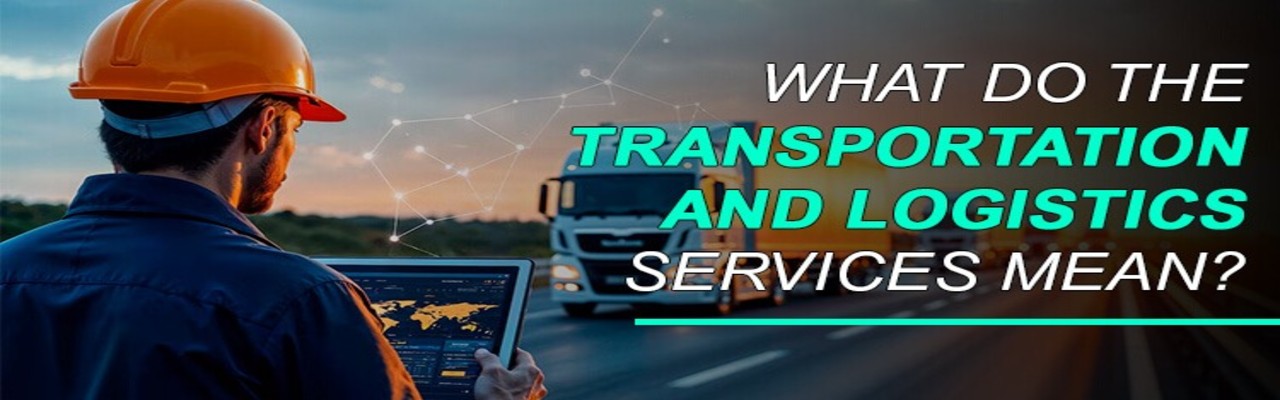
Transport and logistics services play a vital role in supply chain management. The service works as the support system for a supply chain, and the transportation of goods from one place to another, along with their management, depends on transport and logistics services. The service is essential for managing the flow of goods from their point of origin to the product’s delivery destination. Logistics transportation services are necessary for managing and coordinating the supply of goods across different modes of transportation.
Freight is typically transported from the point of origin to the shipping address via different modes of transportation. Trucks, airplanes, trains, and ships are commonly used to move goods and cargo. Transportation and logistics services are not just about moving goods. In fact, the service aims to deliver the goods on time, that too in a cost-effective manner. The more prompt and affordable the service, the better it is for the company’s reputation.
Furthermore, customer satisfaction depends on the efficiency of transport and logistics services. As a matter of fact, to run a supply chain management seamlessly, focusing on the planning, management, and functioning of transportation and logistics services is a must. Doing so helps in encompassing the procedure at every level, namely, product or raw material sourcing, product procurement, product distribution, and product shipping.
What is the Procedure for Logistics Transportation Services?
Processing the Order
The initial process of the transport and logistics service is processing the order. The entire logistics and transportation services begin with order processing. Receiving and validating customer orders is the essence of order processing. The process includes checking the product’s availability and evaluating the best shipping method. Based on that, the logistics team calculates shipping expenses and generates the appropriate shipping document.
Consolidating the Cargo Shipment
The process of consolidating cargo shipments involves combining multiple cargoes into a single shipment. Combining is typically done to manage transportation costs and reduce them as much as possible. Consolidating freight gives companies the advantage of optimizing space and utilizing resources from small economies, as the number of transportation trips required for logistics services is reduced.
Selecting the Transportation
The next part in logistics transportation is selecting the right carrier to ship the consignment. Choosing the right carrier is important because shipping costs and transit times depend on the mode of transportation you use. After carefully considering the dependency on the transportation mode, the carrier’s capacity, transportation cost, and quality of service, companies select the transportation mode. Proper evaluation and consideration of technological resources can help a company make the right choice.
Tracking the Order
Tracking orders is essential in transport and logistics services because it provides companies with better insights into transportation modes. Real-time tracking and visibility can be achieved via technologies like TMS, i.e., Transportation Management Services. This technology helps online sellers and logistics companies track a shipment’s location and determine the status of the order. It is a proactive way to improve customer service, enhance the supply chain’s visibility, and understand problem-solving tactics in supply chain management.
Delivering to the Last Mile
The final stage of transport and logistics services is last-mile delivery. In this process, the distribution center transports the goods to the end customer’s shipping point. Customer satisfaction depends on this process. This is why it matters the most in logistics. To ensure that last-mile delivery goes smoothly, companies plan an efficient routes, provide accurate shipping information, and use effective methods to help the carrier and customer coordinate. When everything goes as planned, the last-mile delivery becomes seamless.
Frequently Asked Questions
The following are the frequently asked questions on the transport and logistics services:
What are transportation and logistics services?
Transportation and logistics services are an integral element of supply chain management. In simple words, the physical movement of transporting goods from their origin to the delivery point is called transportation and logistics. This service supports the entire supply chain management, be it storing goods, managing the inventory, transporting from one place to another, or managing shipping.
What are the 4 types of transport?
The 4 modes of transport are roadways, airways, waterways, and railways. Each mode of transportation is decided after concluding the shipping destination and the urgency of delivery.
What are the 4 types of logistics?
The 4 types of logistics transportation are “Inbound”, “Outbound”, “Reverse”, and “Third-Party” logistics. Each type is crucial to logistics, as it describes the product lifecycle. These types simply refer to how a product's materials are received, transported to customers, managed, and returned, as well as how logistics operations are outsourced.