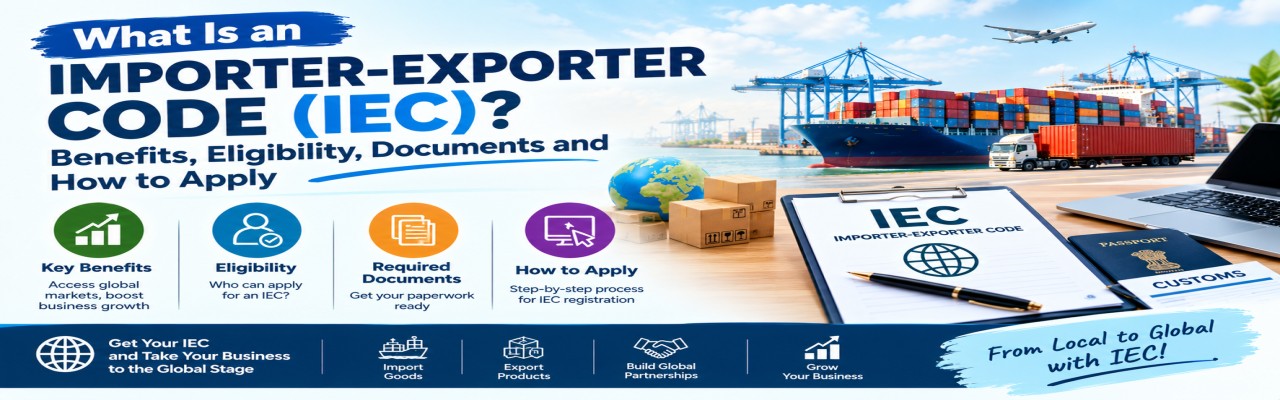
If you want to export goods to or from India, one of the first registrations you may need is an Importer-Exporter Code (IEC). The Directorate General of Foreign Trade (DGFT) issues an IEC as a unique identification number for businesses and individuals involved in international trade.
For manufacturers, exporters, importers, suppliers, traders and other businesses dealing with overseas markets, an IEC helps establish their identity with Indian trade and customs authorities.
In this blog, we explain what an IEC is, how to obtain an IEC number, what documents are required, how much IEC registration costs, whether GST is necessary, how long it takes and how to verify a company's IEC.
What is an Importer-Exporter Code (IEC)?
An importer-exporter code is a unique 10-character alphanumeric code issued by the Directorate General of Foreign Trade (DGFT). Businesses and individuals who import or export goods from India generally need one. The IEC is linked to the applicant’s PAN and serves as an important identification number for international trade transactions.
For example, an Indian manufacturer selling products to a buyer in the USE may need an IEC to complete the export process. Similarly, an Indian business importing machinery or raw materials from another country may need an IEC for the import transaction.
IEC Full Form
IEC stands for the Importer-Exporter Code. It is sometimes informally called an import-export license, import-export code, or IEC certificate. However, IEC is primarily an identification number issued by DGFT, not a general-purpose trade license.
Who Issues the Import-Export Code?
The Directorate General of Foreign Trade (DGFT), which functions under the Ministry of Commerce and Industry, Government of India, issues the IEC. You submit applications online through the official DGFT website.
Why Is IEC Important for International Trade?
An IEC identifies an Indian business or person engaged in import and export activities. It can be required for activities such as:
-
Importing goods into India.
-
Exporting goods from India.
-
Customs clearance for applicable import and export transactions.
-
International trade documentation.
-
Receiving or making certain payments connected with international trade.
-
Availing applicable benefits under India’s foreign trade framework.
-
Establishing a business identity for overseas trade transactions.
For importers an exporters, having the correct IEC is therefore an important part of becoming operational in international trade.
Who is Required to Have an Import-Export Code?
Businesses and individuals who import or export goods generally need an IEC. This may include:
-
Manufacturers exporting their own products
-
Merchant exporters
-
Importers
-
Export trading companies
-
Wholesalers involved in international trade
-
E-commerce businesses importing or exporting goods
-
Proprietorship firms
-
Partnership firms
-
LLPs
-
Private and public limited companies
-
Trusts and other eligible entities
-
Individuals undertaking eligible import or export activities
The exact requirement can depend on the nature of the transaction and applicable exemptions.
Who Is Eligible to Apply for an IEC Code?
A person or business engaged, or intending to engage, in eligible import or export activities can generally apply for an IEC through DGFT. The applicant should have the required PAN and other information/documents prescribed by DGFT. The IEC application can be made by different types of business entities, including:
|
Business type |
Can apply for IEC? |
|
Proprietorship |
Yes |
|
Partnership firm |
Yes |
|
LLP |
Yes |
|
Private Limited Company |
Yes |
|
Public Limited Company |
Yes |
|
Trust/eligible organization |
Yes |
|
Individual |
Yes, where applicable |
The exact documentation may vary depending on the applicant's constitution.
Can I Apply for IEC Without GST?
Yes, GST registration is not generally a prerequisite for obtaining an IEC. An eligible applicant can apply for an IEC even if the business does not have GST registration, subject to the applicable DGFT requirements.
However, GST registration may be required separately depending on the nature of the business, turnover, goods or services supplied, and applicable GST rules. Therefore, IEC registration and GST registration are separate compliances.
How Do I Obtain an Importer-Exporter Code (IEC) Number?
You can apply for an IEC online through the DGFT portal. The general process is:
Step 1: Visit the DGFT Website
Go to the official DGFT website and create a DGFT account or use your existing one.
Step 2: Register or Log In
Complete the required user registration and log in to the DGFT portal.
Step 3: Select IEC Application
Choose the option for applying for an Importer Exporter Code (IEC).
Step 4: Enter Applicant Details
Provide the required information, which may include:
-
PAN details
-
Name of the applicant/entity
-
Business constitution
-
Registered or business address
-
Contact details
-
Bank details
-
Details of the proprietor, partners, directors or other relevant persons
Step 5: Upload Required Documents
Upload the documents and information requested by DGFT.
Step 6: Complete Verification
Complete the applicable authentication or verification process.
Step 7: Pay the IEC Application Fee
Pay the prescribed government fee through the available online payment method.
Step 8: Submit the Application
Review the application carefully and submit it. After processing, the IEC is issued electronically if the application meets the requirements.
Is GST Required for IEC Code?
No, GST is not universally required to obtain an IEC. A business should not assume that it must first obtain GST registration simply because it wants an IEC. Instead, check whether GST registration applies to the business.
How to Get IEC Registration Online?
The basic process for Import Export Code registration is:
DGFT registration → IEC application → Enter business details → Upload documents → Verification → Pay fee → Submit → IEC issuance
Because the process is online, an importer or exporter generally does not need to visit a DGFT office merely to submit a normal IEC application.
Which Documents Are Required for IEC?
The required documents and information depend on the applicant's business structure and the current DGFT application process. Commonly required information includes:
-
PAN details
-
Proof of address, where applicable
-
Bank account details
-
Bank proof or canceled cheque, where required
-
Details of the business/entity
-
Details of proprietor, partners, directors or authorized persons, as applicable
-
Digital/electronic verification through the prescribed process
For companies, LLPs and other entities, additional entity-related information may be required.
Important Tip
Before applying, check the latest document requirements displayed on the DGFT portal. Do not rely only on an old IEC registration checklist because online requirements can change.
How Much Does It Cost to Get an Import Export Code (IEC) in India?
The government application fee for IEC is ₹500 under the current DGFT fee structure. Therefore:
IEC application government fee = ₹500
If you use a consultant or professional to complete the application, their service charges will be separate from the government fee.
How Many Days Does It Take to Get an IEC Certificate?
IEC applications are processed electronically by DGFT. A correctly completed application with the required information and successful verification can generally be processed relatively quickly. However, the actual processing time can vary because of:
-
Incorrect information
-
PAN-related issues
-
Bank verification
-
Document problems
-
Technical issues
-
Application discrepancies
-
Additional verification requirements
Therefore, avoid treating a fixed number of days as guaranteed.
Does an IEC Certificate Expire?
Generally, an IEC does not have a conventional expiry date. However, IEC holders must keep their IEC details updated as prescribed by DGFT.
DGFT has also introduced an annual IEC updation requirement. Businesses should check the IEC profile and complete the required confirmation/update within the prescribed period each year.
Failure to comply with applicable annual updation requirements can result in the IEC being deactivated or otherwise affected.
Does IEC Need to Be Renewed Every Year?
An IEC is not normally renewed like a license with a fixed expiry date. Instead, the holder must comply with the applicable annual IEC updation/confirmation requirement. Therefore, importers and exporters should regularly check their DGFT profile.
Can I Renew My IEC Certificate Online?
You can complete the IEC-related updation process online through the DGFT portal. If DGFT requires annual confirmation or updating of IEC details, the IEC holder should complete the process within the prescribed period. Businesses should also update changes such as:
-
Address
-
Bank details
-
Contact information
-
Entity information
-
Directors/partners or other relevant details where applicable.
What Are the Benefits of an IEC?
An IEC provides several practical benefits to businesses involved in international trade.
1. Enables International Trade
For transactions that require an IEC, it allows an Indian business to undertake eligible import and export activities.
2. Helps With Customs Procedures
IEC information is used in relevant customs and international trade documentation.
3. Establishes Business Identity
The code provides an identifiable reference for the importer or exporter.
4. Supports Export Documentation
Exporters may need to provide IEC details across various trade-related documents and processes.
5. Useful for Growing Overseas Markets
For manufacturers and suppliers looking for international buyers, obtaining an IEC is an important step toward becoming export-ready.
6. Helps Businesses Build a Formal Export Process
Once the business has its IEC and other required registrations and documents, it can develop a structured process for receiving international inquiries, preparing quotations and fulfilling export orders.
Can I Export Without IEC?
For most goods exports, an IEC is generally required unless a specific exemption applies. However, exceptions and special circumstances exist under the foreign trade framework. So, don't assume every export transaction follows the same IEC requirement. If you are planning to export a specific product, check the latest DGFT provisions and applicable customs requirements before shipping.
Can I Import Without an IEC Code?
For normal commercial imports of goods, an IEC is generally required unless the transaction falls under an applicable exemption. Some import categories or specific circumstances may be exempt. Therefore, businesses should check the current DGFT and customs provisions for their particular transaction.
Is IEC Compulsory for Export of Services?
The IEC requirement for services differs from the general requirement for exports of goods.
An IEC is not automatically required for every export of services merely because the service is supplied to a foreign customer.
However, an IEC may be required in certain situations, including when the service provider seeks benefits under the Foreign Trade Policy or when a specific regulatory requirement applies.
Therefore, service exporters should check the rules that apply to their specific service and transaction.
IEC for Manufacturers and Exporters
For an Indian manufacturer planning to enter international markets, obtaining an IEC should be part of the export-readiness process.
-
A manufacturer may also need to consider:
-
GST registration, where applicable
-
Product-specific licences
-
Quality certifications
-
Packaging and labeling requirements
-
Customs documentation
-
Shipping documentation
-
Product classification
-
Certificate of Origin, where required
-
Foreign buyer requirements
-
Payment and banking procedures
Having an IEC alone does not automatically make every product eligible for export. Product-specific restrictions and compliance requirements may also apply.
IEC for Importers and Traders
Importers use IEC as part of their import and customs compliance framework. For example, a trading company importing raw materials, machinery, components or finished products may need to provide IEC details during relevant import procedures. Before importing, businesses should understand:
-
Customs classification
-
Import duties
-
GST and other applicable taxes
-
Product-specific restrictions
-
Required licences
-
Customs documentation
-
Country-of-origin requirements
-
Shipping and logistics costs
How Can I Find the Import Export Code (IEC) of a Company?
You can verify an IEC code through the official DGFT system. To find a company's IEC, use the DGFT's IEC-related search or verification facility and enter the information requested by the portal. Depending on the facility and current portal design, you may be able to search or verify details using information such as:
-
IEC number
-
Entity/business name
-
PAN or other identifying information
-
Always use the official DGFT portal for verification rather than relying on an unofficial database.
How Do I Find My IEC Code?
If you have already obtained an IEC but cannot remember the number, you can check your DGFT account and IEC-related records. Because the IEC is linked with the applicant's PAN, you should also keep your DGFT registration information and issued IEC documents safely.
Where Should Businesses Keep Their IEC Details?
Keep the IEC information available with:
-
Export documentation
-
Import documentation
-
Commercial invoices
-
Shipping records
-
Customs records
-
Bank/trade documentation
-
Business compliance records
This makes it easier to complete future international trade transactions.
What Is IEC Code Verification?
IEC code verification means checking whether an IEC belongs to a particular importer/exporter and whether the associated information can be verified through the official DGFT system. IEC verification can be useful when:
-
Checking a supplier
-
Checking an exporter
-
Verifying a buyer or trading company
-
Reviewing business documentation
-
Conducting B2B due diligence
-
For international B2B transactions, verification is one useful step, but businesses should not treat IEC verification alone as proof that a company is financially reliable or commercially trustworthy.
IEC and B2B International Trade
For B2B companies, IEC is only one part of becoming export-ready. An exporter also needs to build credibility with international buyers. This can include:
-
Company profile
-
Product catalogue
-
Product specifications
-
MOQ information
-
Packaging details
-
Certifications
-
Production capacity
-
Export markets
-
Payment terms
-
Shipping terms
-
Business contact details
-
Trade references where appropriate
B2B platforms can also help manufacturers, suppliers and exporters connect with potential overseas buyers. A supplier with a complete company profile, clear product information and proper trade documentation can make it easier for buyers to evaluate the business.
IEC vs GST Registration
IEC and GST registration serve different purposes.
|
Feature |
IEC |
GST Registration |
|
Issuing authority |
DGFT |
GST authorities |
|
Main purpose |
Import/export identification |
GST taxation and compliance |
|
Mainly related to |
International trade |
Goods/services supplied under GST |
|
Is it the same registration? |
No |
No |
|
GST always required for IEC? |
No |
Depends on applicable GST rules |
Having an IEC does not automatically mean that a business is GST-registered, and having GST registration does not replace the need for an IEC where an IEC is required.
IEC vs Import-Export License
IEC is often described as an import-export license in everyday business language, but the terms are not identical. An IEC is primarily an identification code for import/export activities.
Some products, industries or transactions may require additional licenses, permissions, registrations or certificates. For example, businesses dealing with regulated products may have additional compliance requirements from the relevant authority. Therefore:
IEC does not mean that every product can automatically be imported or exported without additional approval.
Common Mistakes to Avoid During IEC Registration
1. Entering Incorrect PAN Details
Because IEC is linked with PAN, incorrect PAN information can create problems.
2. Providing Incorrect Business Information
Make sure the entity name, address and other details match the relevant official records.
3. Ignoring Bank Details
Provide accurate banking information and complete any verification required by DGFT.
4. Uploading Incorrect Documents
Check the current DGFT requirements before uploading documents.
5. Forgetting Annual IEC Updation
IEC holders should monitor DGFT notifications and complete applicable annual updation within the prescribed period.
6. Assuming IEC Is the Only Export Compliance
An IEC is important, but exporters may also need product-specific registrations, certificates, licenses and customs documentation.
IEC Registration Checklist for New Exporters
Before applying for IEC, keep the following checklist in mind:
-
PAN details are correct
-
Business/entity details are ready
-
Address information is correct
-
Bank account details are available
-
Required documents are ready
-
DGFT account is created
-
Applicant verification can be completed
-
Applicable IEC fee is available
-
Business name and legal information are consistent
-
Product-specific export requirements have been checked
Conclusion
An Importer-Exporter Code (IEC) is an important requirement for many Indian businesses involved in international trade. It provides a unique identification for eligible import and export activities and helps businesses complete relevant trade and customs processes. Businesses can register for an IEC online through DGFT, and the government application fee is currently ₹500. GST registration is not required to obtain an IEC, and the IEC itself generally does not have a fixed expiry date.
However, getting an IEC is only the first step toward becoming export-ready. Manufacturers, suppliers, traders and exporters should also understand product-specific regulations, customs procedures, taxation, documentation and the requirements of their target market. For businesses looking to find international buyers, an IEC can be combined with a strong B2B company profile, a detailed product catalog and proper export documentation to build credibility and expand into global markets.