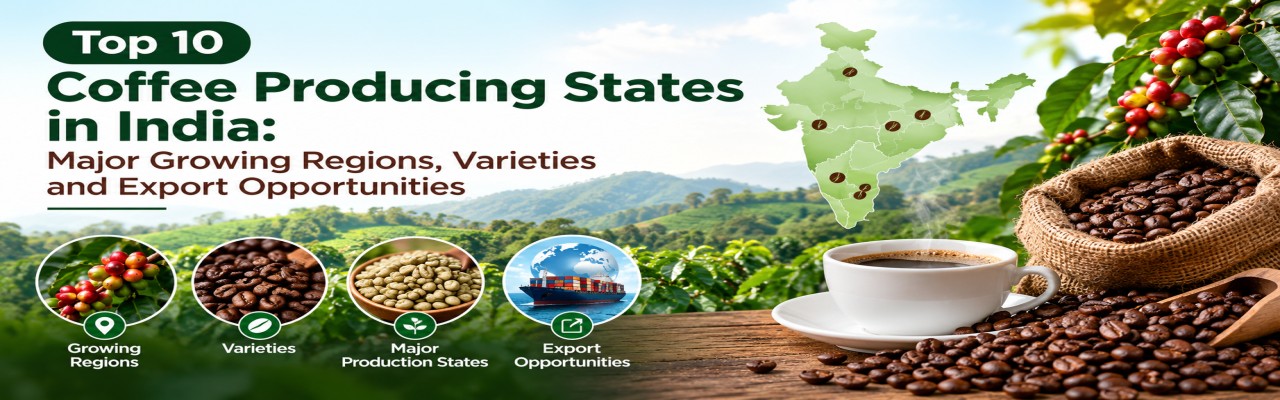
India's diverse coffee industry includes growers, plantation companies, instant coffee manufacturers, traditional filter coffee brands, specialty roasters, and exporters. Major coffee-growing regions include Karnataka, Kerala, and Tamil Nadu, while areas like Araku Valley in Andhra Pradesh are also known for distinctive Indian coffee.
For businesses, this diversity creates several sourcing opportunities. A café may need freshly roasted coffee beans, a retailer may need bulk coffee powder, and a startup may seek a third-party manufacturer to launch its own coffee brand. Finding the right supplier depends on the product you need, your order volume, quality requirements, packaging preferences, and budget.
This guide covers the top 10 coffee bean and powder companies in India, popular coffee brands, major coffee-growing regions, bulk suppliers, exporters, distributors, and private-label manufacturing options. It also explains how businesses can compare suppliers before placing a wholesale order.
Important note: India has no official ranking of coffee companies by sales or production volume. The companies listed below are selected for their market presence, brand recognition, manufacturing or sourcing activities, and relevance to buyers. This is not a verified sales ranking, and not every company necessarily offers direct wholesale or private-label services. Confirm current offerings and commercial terms with each company.
Quick Overview of India's Coffee Industry
Here are some important facts about coffee production and sourcing in India:
- Main coffee varieties: India grows Arabica and Robusta coffee.
- Major coffee-producing states: Karnataka, Kerala, and Tamil Nadu.
- Important growing regions: Kodagu, Chikmagalur, Hassan, Wayanad, Nilgiris, and Shevaroys.
- Industry body: The Coffee Board of India supports coffee cultivation, research, marketing, and export development.
- Popular Indian coffee products: Monsooned Malabar, Mysore Nuggets Extra Bold, Indian filter coffee, roasted coffee beans, and instant coffee.
- Major product categories: Green coffee beans, roasted beans, ground coffee powder, coffee-chicory blends, and instant coffee.
Indian coffee suppliers serve markets ranging from everyday retail to premium cafés, hotels, institutional buyers, and international importers.
What Are the Top 10 Coffee Companies in India?
Well-known coffee companies and brands in India include Tata Consumer Products, Nestlé India, Hindustan Unilever, CCL Products, Coffee Day, Narasu's Coffee, Cothas Coffee, Blue Tokai, Third Wave Coffee, and Araku Coffee. The following table provides an overview of their businesses and potential relevance to buyers.
|
No. |
Company or brand |
Known for |
Potential relevance to buyers |
|
1 |
Tata Consumer Products (Tata Coffee) |
Coffee products, plantations, and instant coffee operations |
Established coffee business and branded products |
|
2 |
Nestlé India |
Nescafé and Nescafé Sunrise |
Instant coffee and retail distribution |
|
3 |
Hindustan Unilever |
Bru coffee products |
Mass-market instant coffee |
|
4 |
CCL Products (India) |
Continental Coffee, instant coffee, private-label manufacturing, and exports |
Commercial manufacturing and export sourcing |
|
5 |
Coffee Day group |
Café Coffee Day, retail coffee, and associated coffee operations |
Café and retail coffee products |
|
6 |
Narasu's Coffee |
South Indian filter coffee |
Traditional roasted and ground coffee |
|
7 |
Cothas Coffee |
South Indian filter coffee blends |
Regional retail and institutional sourcing |
|
8 |
Blue Tokai Coffee Roasters |
Specialty roasted coffee beans and ground coffee |
Premium coffee and café sourcing inquiries |
|
9 |
Third Wave Coffee Roasters |
Café operations and roasted coffee products |
Specialty coffee and retail products |
|
10 |
Araku Coffee |
Single-origin Arabica associated with Araku Valley |
Premium origin-focused coffee |
These companies serve different segments. Some focus on packaged consumer products, while others are better known for specialty roasting, traditional filter coffee, or manufacturing.
1. Tata Consumer Products and Tata Coffee
Tata is one of the best-known names in India's food and beverage industry. Its coffee portfolio includes Tata Coffee Grand, while its broader coffee business includes plantation operations, instant coffee, and coffee sourcing.
Why buyers may consider it: Businesses researching established coffee brands and large-scale coffee operations may find Tata's portfolio relevant. However, corporate structures and operations can change, so verify which entity currently supplies the product you want to source.
2. Nestlé India
Nestlé India markets coffee products under the Nescafé and Nescafé Sunrise brands. Its portfolio includes instant coffee products for different consumer preferences.
Why buyers may consider it: Nescafé is a familiar retail brand with an established distribution network. Retailers, supermarkets, and institutional buyers can enquire about authorized distribution rather than assume the company sells directly to every bulk buyer.
3. Hindustan Unilever
Hindustan Unilever sells coffee products under the Bru brand. Its range includes instant coffee products for everyday consumers as well as premium segments.
Why buyers may consider it: Bru may appeal to retailers, wholesalers, and businesses seeking branded, packaged coffee. Buyers should contact the company's sales network or authorized distributors for current product availability and wholesale terms.
4. CCL Products (India)
CCL Products is known for instant coffee manufacturing and its Continental Coffee brand. The company also offers private-label manufacturing and serves international coffee markets.
Why buyers may consider it: CCL Products is worth researching if you are exploring commercial instant coffee manufacturing, export sourcing, or coffee products made for another brand. Confirm its current manufacturing capabilities, minimum order quantities, and contract terms directly.
5. Coffee Day Group
The Coffee Day Group includes Café Coffee Day, retail coffee products, and related coffee operations. Coffee Day Enterprises has also been associated with the group's listed corporate structure.
Why buyers may consider it: Its retail and café presence makes the group relevant when researching coffee brands and café-oriented products. Check the current operating status and the specific legal entity responsible for the product before entering into a supply agreement.
6. Narasu's Coffee
Narasu's is a long-established coffee brand known for South Indian filter coffee, including roasted and ground coffee and coffee-chicory blends.
Why buyers may consider it: Retailers, restaurants, hotels, and food-service businesses serving traditional South Indian coffee may find its product category relevant. Enquire about regional distribution, bulk packaging, and institutional supply.
7. Cothas Coffee
Cothas Coffee is another established name in South Indian filter coffee. Its products include roasted and ground coffee blends designed for traditional preparation.
Why buyers may consider it: Cothas may be worth exploring for regional retail, hospitality, and food-service requirements. Confirm current wholesale availability, product formats, and delivery coverage.
8. Blue Tokai Coffee Roasters
Blue Tokai is known for specialty coffee, freshly roasted beans, ground coffee, and café operations. Its products appeal to consumers interested in different origins, roast profiles, and brewing methods.
Why buyers may consider it: Cafés, offices, and premium retailers researching specialty coffee may find its products relevant. Ask about current business-to-business arrangements, available origins, and minimum order quantities.
9. Third Wave Coffee Roasters
Third Wave Coffee is known for its café business and retail coffee products, including roasted coffee offerings.
Why buyers may consider it: Businesses interested in specialty coffee and café-oriented products can explore its current product range. Do not assume that consumer retail availability automatically means it offers wholesale or private-label manufacturing.
10. Araku Coffee
Araku Coffee is associated with Arabica coffee from the Araku Valley region of Andhra Pradesh. It is known for its origin-focused positioning and links with farming communities.
Why buyers may consider it: Premium retailers, cafés, and businesses building an origin-led coffee range may want to explore its products. Confirm available volumes, formats, and commercial supply terms before placing an order.
What Are the Top Coffee Powder Brands in India?
Popular coffee powder brands in India include Nescafé, Bru, Tata Coffee, Continental Coffee, Narasu's Coffee, Cothas Coffee, Leo Coffee, Devan's, Blue Tokai, and Sleepy Owl. The best brand for a business depends on whether it needs instant coffee, traditional filter coffee, or specialty ground coffee.
Types of Coffee Powder Available in India
|
Type |
What it means |
Examples to research |
|
Instant coffee |
Processed coffee that dissolves in hot or cold liquids |
Nescafé, Bru, Tata Coffee Grand, Continental |
|
Filter coffee powder |
Roasted and ground coffee, sometimes blended with chicory |
Narasu's, Cothas, Leo Coffee, Devan's |
|
Specialty ground coffee |
Ground coffee selected for specific origins, roast profiles, or brewing methods |
Blue Tokai and other specialty roasters |
Who Is the Largest Coffee Manufacturer in India?
No single answer applies to every category because the largest company depends on whether you measure retail sales, plantation operations, instant coffee production, exports, or private-label manufacturing.
|
Business category |
Companies to research |
|
Retail instant coffee brands |
Nestlé India and Hindustan Unilever |
|
Retail instant coffee brands |
Nestlé India and Hindustan Unilever |
|
Integrated coffee operations |
Tata's coffee business |
|
Instant coffee manufacturing and exports |
CCL Products |
|
Café chains and consumer-facing coffee |
Coffee Day group and Third Wave Coffee |
For a reliable comparison, review the latest annual reports, company disclosures, and available production or export data. A company with a popular retail brand isn't necessarily the largest green bean supplier or the best option for contract manufacturing.
Coffee Companies in India Listed on the Stock Market
Coffee-related businesses associated with Indian stock exchanges include Tata Consumer Products, Nestlé India, Hindustan Unilever, CCL Products (India), and Coffee Day Enterprises. Their businesses are not identical. Some are diversified food and beverage companies, while others focus more directly on coffee manufacturing or related operations.
- Tata Consumer Products: A diversified food and beverage business with coffee products.
- Nestlé India: A major FMCG company with coffee as one of its product categories.
- Hindustan Unilever: A diversified FMCG company that markets Bru coffee.
- CCL Products: A coffee-focused company associated with instant coffee manufacturing and exports.
- Coffee Day Enterprises: Associated with the Coffee Day group and its corporate operations.
If you are checking a company's listing status or researching it for investment purposes, verify the latest information on the NSE and BSE websites. Corporate structures and listing status can change. This section is for general information and is not investment advice.
Top 10 Instant Coffee Brands in India
People use instant coffee in homes, offices, hotels, restaurants, vending operations, and food-service businesses. Popular brands and product ranges include:
|
Brand or range |
Company or brand owner |
Typical positioning |
|
Nescafé Classic |
Nestlé India |
Everyday instant coffee |
|
Nescafé Gold |
Nestlé India |
Premium instant coffee |
|
Nescafé Sunrise |
Nestlé India |
Coffee-chicory instant blend |
|
Bru Instant |
Hindustan Unilever |
Everyday instant coffee |
|
Bru Gold |
Hindustan Unilever |
Premium instant coffee |
|
Tata Coffee Grand |
Tata coffee portfolio |
Packaged instant coffee |
|
Continental Xtra |
CCL Products |
Instant coffee |
|
Coffee Day |
Coffee Day group |
Coffee products; verify the current range |
|
Blue Tokai |
Blue Tokai Coffee Roasters |
Specialty-focused coffee products |
|
Sleepy Owl |
Sleepy Owl Coffee |
Modern packaged coffee products |
This is a selection of brands and ranges, not an official ranking by sales. Product availability and formulations can change.
How to Choose Instant Coffee for Your Business?
Before buying instant coffee in bulk, compare:
- Ingredients: Check whether the product contains only coffee or includes chicory.
- Processing method: Freeze-dried and spray-dried instant coffees can differ in aroma, texture, and cost.
- Taste profile: Request samples and test the product in the drinks you intend to serve.
- Cost per serving: Compare the quantity needed per cup rather than just the pack price.
- Packaging: Check availability in jars, pouches, sachets, or bulk packs.
- Supply reliability: Confirm minimum order quantities, lead times, and replenishment schedules.
Top 20 Coffee Brands in India
India's coffee market includes mass-market brands, traditional filter coffee companies, specialty roasters, café chains, and imported premium brands. The following 20 names are worth researching. They are grouped by category rather than ranked by sales.
|
Category |
Coffee brands |
|
Mass-market and instant coffee |
Nescafé, Bru, Tata Coffee, Continental |
|
South Indian filter coffee |
Narasu's, Cothas, Leo Coffee, Devan's |
|
Specialty and direct-to-consumer coffee |
Blue Tokai, Third Wave, Sleepy Owl, Araku, Seven Beans, Rage Coffee, Subko |
|
Café brands with retail products |
Coffee Day, Barista, Starbucks |
|
Imported premium brands |
Lavazza, Illy |
For B2B buyers, brand recognition is only one consideration. The more useful questions are whether the supplier offers the required product format, can meet your order volume, maintains consistent quality, and provides suitable pricing and packaging.
What Are the Best Coffee Beans in India?
India is known for several coffee-growing regions, bean grades, and processing styles. Popular examples include Monsooned Malabar, Mysore Nuggets Extra Bold, Coorg Arabica, Chikmagalur Arabica, Baba Budangiri Arabica, Araku Valley Arabica, Wayanad Robusta, Nilgiri coffee, Shevaroys coffee, and Kaapi Royale.
|
Coffee bean or origin |
Region |
What buyers should know |
|
Monsooned Malabar |
India's western coastal coffee belt |
Known for its distinctive processing, low perceived acidity, and heavy body |
|
Mysore Nuggets Extra Bold |
Karnataka |
A large-bean Arabica grade |
|
Coorg Arabica |
Kodagu, Karnataka |
An origin associated with Indian specialty coffee |
|
Chikmagalur Arabica |
Karnataka |
Known for its coffee-growing heritage and Arabica production |
|
Baba Budangiri Arabica |
Karnataka |
An established coffee-growing origin |
|
Araku Valley Arabica |
Andhra Pradesh |
Suitable for origin-focused coffee offerings |
|
Wayanad Robusta |
Kerala |
A Robusta-growing region |
|
Nilgiri coffee |
Tamil Nadu |
A regional coffee option |
|
Shevaroys coffee |
Yercaud, Tamil Nadu |
A regional origin for buyers exploring southern Indian coffees |
|
Kaapi Royale |
Southern India |
A recognized washed Robusta grade |
Some Indian coffee origins and products have Geographical Indication (GI) recognition. Buyers who intend to use a GI name commercially should verify the applicable registration, geographical scope, and permitted use rather than assuming every coffee from a region qualifies.
Arabica vs Robusta: Which Coffee Should You Buy?
Arabica and Robusta serve different purposes. Neither is automatically better for every buyer.
|
Feature |
Arabica |
Robusta |
|
Typical taste |
Often sweeter and more aromatic |
Often stronger, more bitter, and fuller-bodied |
|
Acidity |
Often higher, depending on origin and processing |
Often lower, depending on the lot |
|
Caffeine |
Generally lower than Robusta |
Generally higher than Arabica |
|
Common uses |
Specialty coffee, premium roasted beans, blends |
Instant coffee, espresso blends, and strong coffee blends |
|
Buyer considerations |
Origin, processing, roast profile, and cup quality |
Defect level, strength, processing, and consistency |
Many commercial coffee products combine Arabica and Robusta to achieve a particular taste profile, body, and cost.
What Is Monsooned Malabar Coffee?
Monsooned Malabar is a distinctive Indian coffee processing style. Green coffee beans are exposed to monsoon conditions along India's western coast for weeks, changing their physical characteristics and cup profile.
The resulting coffee is commonly associated with a heavy body, earthy notes, and lower perceived acidity. It may interest specialty roasters, cafés, and importers seeking a distinctive Indian coffee product. Buyers should ask for the grade, processing details, sample, and availability of the specific lot they intend to purchase.
Which Countries Produce the Most Coffee?
Brazil and Vietnam consistently rank among the world's leading coffee producers. Other major producers include Colombia, Indonesia, Ethiopia, Honduras, India, Uganda, Peru, and countries such as Mexico and Guatemala. Exact rankings vary by crop year and data source, so buyers should consult the latest International Coffee Organization or USDA reports when production figures matter for a sourcing decision.
Within India, Karnataka is the leading coffee-producing state, followed by other important growing regions in Kerala and Tamil Nadu. Coffee is also grown in smaller or emerging areas, including parts of Andhra Pradesh, Odisha, and the Northeast. Indian coffee is often shade-grown. However, buyers should request farm-level information and relevant documentation if their purchasing requirements include shade-grown cultivation, sustainability, or traceability.
Who Are the Top Coffee Exporters in India?
No single verified list identifies the current top 10 Indian coffee exporters across all product categories. Companies in India's coffee export industry include CCL Products, Tata's coffee business, and Coffee Day-related operations, along with registered exporters, traders, and specialty coffee businesses. Indian coffee exports include several product categories:
- Green coffee beans: Arabica, Robusta, and specialty lots.
- Roasted coffee: Whole beans and ground coffee for retail and specialty markets.
- Instant coffee: Processed coffee supplied to international brands and importers.
- Specialty and origin-specific coffee: Products marketed around origin, processing, and cup characteristics.
Export destinations and shipment volumes change over time. Businesses seeking current market data should consult Coffee Board of India publications and official trade statistics.
How to Verify a Coffee Exporter in India?
Before placing an export order, check the following:
- Importer-Exporter Code (IEC): Ask for the exporter's IEC and verify the details.
- Coffee Board registration: Request relevant registration details and confirm applicability to the business.
- Business documentation: Check GST and company registration documents as applicable.
- Food safety compliance: Request the relevant license and certificates for the product and destination market.
- Product samples: Evaluate a pre-shipment sample and request laboratory or cupping reports where appropriate.
- Contract terms: Confirm product specifications, Incoterms, payment terms, inspection arrangements, and delivery schedule.
- References: Where possible, check the supplier's export experience and references from other buyers.
Required documentation depends on the product, the destination country, and the transaction. Verify current regulatory requirements before shipping.
Top Coffee Bean Suppliers in India: How to Build a Shortlist
No publicly verified, universally accepted ranking exists for the top 25 coffee bean suppliers in India. Rather than relying on an unverified list, buyers can build a supplier shortlist from several categories.
|
Supplier category |
Examples to research |
Best suited for |
|
Integrated coffee businesses |
Tata's coffee operations and Coffee Day-related businesses |
Established operations and a range of coffee products |
|
Instant coffee manufacturers |
CCL Products |
Instant coffee, commercial manufacturing, and export inquiries |
|
Specialty roasters |
Blue Tokai, Third Wave, Subko, Seven Beans |
Roasted beans, specialty coffee, and café requirements |
|
Origin-focused coffee businesses |
Araku Coffee |
Premium, origin-led coffee products |
|
Traditional filter coffee brands |
Narasu's, Cothas, Leo Coffee, Devan's |
Filter coffee and regional retail |
|
Estates and planters |
Coffee estates in Kodagu, Chikmagalur, Wayanad, and Nilgiris |
Green beans and origin-specific sourcing |
|
Curing works and traders |
Registered curing works and coffee traders |
Commercial volumes of green coffee |
Where to Find Bulk Coffee Bean Suppliers
Businesses can identify potential suppliers through:
- Coffee Board of India: Consult relevant industry resources and available lists of registered growers, curing works, or exporters.
- Coffee trade fairs and industry events: Meet suppliers, compare samples, and discuss commercial requirements.
- B2B marketplaces: Search platforms such as IndiaMART, TradeIndia, and ExportersIndia, while independently verifying seller credentials.
- Direct estate inquiries: Contact coffee estates and producer businesses to ask about available lots.
- Roaster websites: Enquire about wholesale programs for cafés, restaurants, offices, and retailers.
Roasted Coffee Bean Manufacturers in India
Roasted coffee bean suppliers cater to cafés, restaurants, hotels, offices, retailers, and specialty coffee businesses. Companies and brands to research include Blue Tokai, Third Wave, Subko, Seven Beans, Araku, Tata's coffee business, Narasu's, and Cothas, depending on the product and supply requirement.
However, these businesses operate under different models. Some focus on consumer retail or cafés, while others may have wider manufacturing or sourcing operations. Confirm whether the company currently offers B2B supply.
Questions to Ask a Roasted Coffee Supplier
Before ordering roasted beans, ask:
- Which coffee origins, species, and grades do you offer?
- Do you sell beans whole or ground?
- What roast levels are available?
- Can you share the roast date and recommended use period?
- What packaging options are available?
- Do you use valve bags or other packaging designed to preserve freshness?
- What are the minimum order quantity and delivery lead time?
- Can you provide samples before a bulk order?
- Do you offer custom blends or private-label packaging?
How do I choose the Right Roast Level?
|
Roast level |
Typical flavor profile |
Common applications |
|
Roast level |
Brighter, often more fruit-forward |
Pour-over and specialty brewing |
|
Medium |
Balanced sweetness and body |
Filter coffee and general brewing |
|
Medium-dark or dark |
Bolder, often more roasted or bittersweet notes |
Espresso and milk-based coffee drinks |
The ideal roast depends on the beans, brewing method, customer preferences, and consistency requirements. Test samples using the same preparation method your business will use.
Coffee Bean Manufacturers in India: Prices and Bulk Supply
Coffee bean prices in India vary according to species, origin, grade, processing method, roast level, packaging, order quantity, and market conditions. A single price cannot accurately represent every type of coffee. For a reliable estimate, request written quotations from several suppliers using the same product specifications.
Factors That Affect Coffee Prices
- Species and grade: Arabica and Robusta have different market characteristics, and quality grades affect pricing.
- Origin and processing: Washed, natural, and monsooned coffees can have different prices.
- Product form: Green beans, roasted beans, ground coffee, and instant coffee have different production costs.
- Order quantity: Larger orders may qualify for different commercial rates.
- Packaging: Bulk bags, retail packs, jars, sachets, and private-label packaging affect the final cost.
- Market conditions: Domestic and international coffee prices and currency movements can influence quotations.
- Certifications: Certified organic or sustainability-focused products may have additional costs.
- Logistics: Transport, insurance, customs-related expenses, and delivery terms affect the final landed cost.
What Information Should You Include in a Coffee Price Inquiry?
To receive comparable quotations, provide each supplier with the same details:
Product type: green beans, roasted beans, ground coffee, or instant coffee.
- Species, origin, grade, and processing method.
- Required quantity and delivery schedule.
- Packaging format and pack size.
- Delivery destination and preferred Incoterm, if applicable.
- Required certifications or quality specifications.
- Payment terms and any inspection requirements.
Also ask whether the quotation includes taxes, packaging, freight, and other charges. The applicable tax treatment depends on the product and transaction, so confirm it with a qualified tax professional where necessary.
Where Can You Buy Bulk Coffee Beans Wholesale in India?
Businesses can source wholesale coffee beans directly from estates, curing works, traders, commercial manufacturers, and roasters with B2B supply programs. B2B marketplaces and industry events can also help buyers discover potential suppliers.
The best option depends on whether you need green coffee for further processing or roasted coffee ready for brewing and retail.
|
Buying route |
Best suited for |
What to verify |
|
Direct from estates |
Origin-focused and traceable green coffee |
Available lots, harvest timing, quantity, and documentation |
|
Curing works and traders |
Commercial green coffee volumes |
Grade, moisture, defects, and lot consistency |
|
Roasters with B2B programs |
Roasted beans for cafés and offices |
Roast date, packaging, freshness, and supply continuity |
|
Large manufacturers |
Finished coffee products and larger requirements |
Product availability, order terms, and distribution arrangements |
|
B2B marketplaces |
Discovering several suppliers |
Seller credentials, samples, and trading history |
|
Coffee trade events |
Meeting suppliers and evaluating samples |
Product specifications and follow-up commercial terms |
Tips for First-Time Wholesale Coffee Buyers
- Request samples before committing to a large order.
- Place a small trial order to evaluate quality and consistency.
- For green beans, ask for relevant information on moisture, defects, grade, and bean size.
- For roasted coffee, check the roast date and packaging.
- Confirm delivery timelines, storage conditions, and shelf-life information.
- Compare the total delivered cost, not just the quoted product price.
- Avoid large advance payments to suppliers whose credentials you haven't verified.
How to Find Coffee Powder Distributors in India?
Coffee powder distributors supply packaged coffee to retailers, supermarkets, hotels, restaurants, offices, and other institutional buyers. No single official ranking exists for India's top coffee powder distributors, and availability often depends on the city, brand, and product category.
Potential sourcing routes include authorized distributors of Nescafé, Bru, and Tata coffee products, regional filter coffee brands, and verified wholesale sellers.
Steps to Find a Coffee Distributor
- Contact the brand's sales team to enquire about authorized distributors in your area.
- Approach regional coffee companies such as Narasu's, Cothas, Leo Coffee, and Devan's for wholesale information.
- Search B2B platforms for distributors supplying your product category.
- Ask local cafés, hotels, and food-service businesses about established suppliers.
- Compare delivery coverage, pricing, payment terms, and stock freshness.
Questions to Ask Before Appointing a Distributor
- Can the distributor provide proof of authorization?
- What is the minimum order quantity?
- Which areas does the distributor serve?
- What are the payment and credit terms?
- How are damaged, expired, or incorrectly supplied products handled?
- What is the expected delivery time?
- How can you verify product authenticity and batch details?
For businesses buying branded products for resale, genuine stock and reliable replenishment matter as much as price.
Third-Party Coffee Manufacturers in India
Third-party coffee manufacturers produce coffee products that are sold under another company's brand. This arrangement can help startups, retailers, café chains, and exporters launch coffee products without investing in their own manufacturing facility.
Depending on the manufacturer's capabilities, contract manufacturing may cover roasted beans, ground coffee, instant coffee, blending, and packaging. CCL Products is an established name in instant coffee manufacturing, private-label work, and exports. Other roasters and processors may offer custom blends or contract packing, but you should confirm their current capabilities directly.
Who Can Benefit from Private-Label Coffee Manufacturing?
- Startups: Businesses launching their own coffee brands.
- Online sellers: D2C brands selling through websites and e-commerce marketplaces.
- Retailers: Stores and supermarkets developing private-label products.
- Cafés and restaurants: Businesses that want branded coffee for customers or retail sale.
- Hotels and offices: Organizations seeking a consistent coffee blend for their customers or staff.
- Exporters: Businesses supplying coffee under an overseas buyer's brand.
Checklist for Choosing a Third-Party Coffee Manufacturer
1. Licenses and registration
Check the manufacturer's relevant food business license, business registration, and other documents required for the product and market.
2. Manufacturing capabilities
Confirm whether it can roast, grind, blend, process instant coffee, and pack the product you need.
3. Minimum order quantity
Ask for the MOQ, production lead time, sample costs, and repeat-order requirements in writing.
4. Quality control
Enquire about batch testing, traceability, consistency, food safety procedures, and applicable quality certifications.
5. Custom blends
Discuss the desired taste, species, origin, roast level, and consistency requirements. Approve a sample before production.
6. Packaging options
Check whether the manufacturer supports retail bags, jars, sachets, bulk packaging, and other formats you require.
7. Labeling and ingredients
Ensure the label correctly identifies the product, ingredients, and any chicory content, along with other required declarations.
8. Confidentiality and ownership
If you are providing a proprietary recipe or blend, discuss confidentiality, intellectual property, and brand ownership in the contract.
9. Production samples and audits
Evaluate samples and, where practical, assess the manufacturing facility and quality processes before committing to a large order.
How to Choose the Right Coffee Supplier in India?
A well-known brand is not necessarily the best supplier for every business. A suitable supplier should match your product requirements, quality expectations, budget, and expected order volume. Follow these steps when evaluating potential suppliers.
- Define your product: Decide whether you need green coffee beans, roasted beans, filter coffee powder, or instant coffee.
- Set quality specifications: Identify the required species, origin, grade, processing method, roast level, and packaging.
- Verify business documents: Check relevant registrations, licenses, and export documentation.
- Request samples: Taste the product and assess it against your requirements before ordering.
- Compare quotations: Ask multiple suppliers to quote for the same specifications and quantity.
- Review delivery capabilities: Confirm production capacity, lead times, transport arrangements, and stock availability.
- Start with a trial order: Check whether the delivered product matches the approved sample.
- Plan for repeat supply: Assess batch consistency and identify a backup supplier for important products.
Coffee Supplier Comparison Checklist
|
Evaluation factor |
What to check |
|
Product quality |
Grade, defects, moisture where relevant, taste, and roast date |
|
Compliance |
Relevant food licenses, GST, IEC, and industry registrations where applicable |
|
Consistency |
Similar quality across samples and subsequent batches |
|
Capacity |
MOQ, production volume, and delivery lead time |
|
Traceability |
Origin, lot details, and supplier documentation |
|
Pricing |
Product cost, packaging, freight, taxes, and payment terms |
|
Service |
Communication, documentation, and handling of complaints |
|
Supply continuity |
Availability, seasonal variation, and backup arrangements |
A supplier comparison sheet can help your purchasing team decide based on measurable requirements rather than brand recognition alone.
Conclusion
India offers a wide range of coffee sourcing options, from established FMCG brands and instant coffee manufacturers to traditional filter coffee companies, specialty roasters, estates, and exporters.
The right choice depends on what your business needs. Retailers may prioritize branded packaged products and distribution, cafés may focus on freshly roasted beans, and startups may need private-label manufacturing. Importers and wholesalers may prioritize origin, grade, export documentation, and consistent volumes.
Before finalizing a supplier, compare product specifications, request samples, verify documents, and calculate the total delivered cost. Start with a trial order and confirm current prices, minimum order quantities, certifications, and supply terms directly with the company.
For businesses sourcing coffee in bulk, a reliable supplier is not simply the one offering the lowest quote. It is the one that can consistently deliver the right quality, meet your commercial requirements, and support your long-term supply needs.