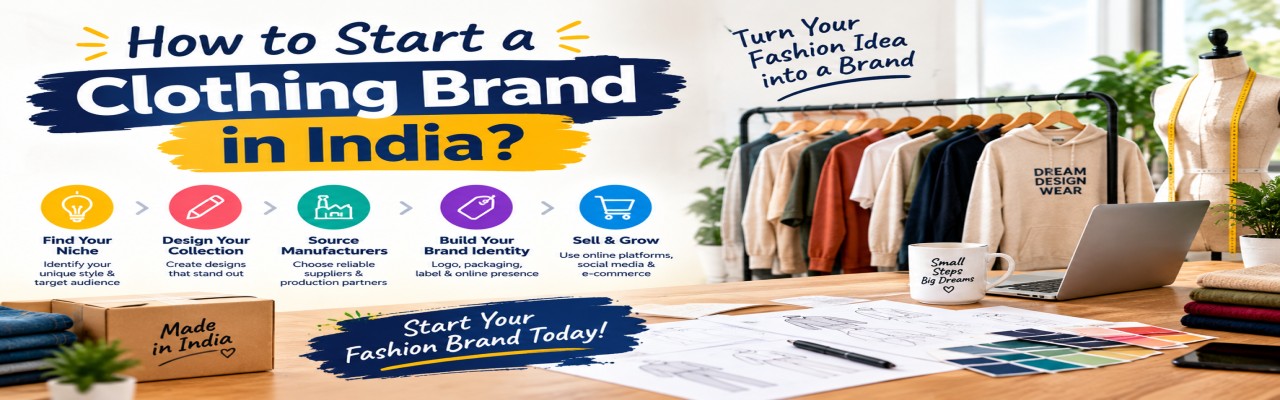
Are you planning to start your own clothing brand in India? You might wonder how to start a clothing brand in India. The idea might be thrilling, but it is not easy to execute. You can start a clothing brand because many categories and options are available, from everyday wear and ethnic clothing to streetwear and sustainable fashion. Further, the growth of e-commerce and social media has also made it easier for small businesses to reach customers without opening a physical store.
So, when you start your clothing business, choose a logo for your brand, then select the right product category. Basically, you need to decide what you will sell, identify your target customers, find reliable suppliers or manufacturers, plan your budget, build your brand identity, and create an effective marketing strategy. Let’s start with a step-by-step guide on how to start a clothing brand in India, along with some of the most trending products you can choose from.
Step-by-Step Process to Start a Clothing Brand in India
It may not be that difficult to start a clothing business in India. However, your chances of success depend on following the right steps. Here is a step-by-step method on how to start a clothing brand in India:
Step 1: Choose Your Clothing Niche
First, decide what type of clothing you want to sell. Fashion has several categories, so trying to sell everything from the beginning can make it difficult to build a clear identity. You can select from any of these niches:
-
Men’s clothing
-
Women's clothing
-
Children’s clothing
-
Ethnic wear
-
Western wear
-
Sports wear
-
Casual wear
-
Work wear
-
Street wear
-
Lounge wear
-
Sustainable clothing
-
Customized clothing
-
Plus size fashion
-
Premium clothing
You can choose one of them. For example, you can build a streetwear brand in India targeting young customers, or develop a sustainable clothing brand using organic and recycled fabric that appeals to eco-conscious consumers and helps differentiate your brand.
Step 2: Research Your Target Customers
Before investing in products, understand who you want to sell to. You need to ask questions such as:
-
Who are my ideal customers?
-
What is their age group?
-
Where do they live?
-
What is their average spending capacity?
-
What type of clothing do they prefer?
-
Where do they usually stop?
-
What brands do they already buy?
-
What problems do they have with existing products?
For example, if you are building a brand targeting college students, you can focus on affordable graphic T-shirts, oversized shirts, and casual clothing. On the other hand, if you are targeting premium customers, focus on quality fabrics, unique designs, and limited collections. Customer research helps you identify specific fashion business opportunities, such as trending styles among your target demographic, before spending money on inventory.
Step 3: Create Clothing Brand Business Plan
A clothing brand business plan gives you clear direction and helps you understand how your business will make money. Your plan should include:
Business name and concept
-
Target audience
-
Clothing category
-
Product range
-
Pricing strategy
-
Manufacturing or sourcing model
-
Estimated investment
-
Marketing plans
-
Sales channels
-
Expected expenses
-
Revenue targets
-
Profit margins
-
Competitors analyses
Starting a clothing brand doesn't require a complicated plan. A simple, clear plan covering these areas can give you confidence and inspire you to take the right steps, helping you feel more prepared and motivated.
Step 4: Decide Your Clothing Business Model
You can start a clothing brand in several ways, and the model you choose depends on your budget and business goals.
-
Manufacturing your own clothes: You can manufacture garments by setting up a production unit. This gives you greater control over production but requires more investment, equipment, workers and operational management.
-
Private label clothing: In private label clothing in India, a manufacturer produces garments for your brand, usually according to agreed specifications. You can sell these products under your own brand name. This model can help you build your brand without setting up your own factory.
-
Print-on-Demand: Print-on-demand allows you to sell products such as T-shirts, hoodies, and sweatshirts without maintaining a large inventory. The product is printed when a customer places an order. This can reduce inventory risk and may suit beginners.
-
Wholesale reselling: You can purchase clothing from wholesale suppliers and sell it under your store or business. However, this model gives you less control over product design and differentiation.
Step 5: Choose a Brand Name and Identity
Your brand name is an important part of your brand journey. You must choose a brand name that is:
-
Easy to pronounce
-
Easy to remember
-
Relevant to your brand
-
Available for registration
-
Suitable for a website domain
-
Suitable for social media handles
You should also develop a consistent visual identity, including:
-
Logo
-
Brand colors
-
Typography
-
Packaging
-
Product labels
-
Brand messaging
Step 6: Register Your Clothing Business
Once you have decided on your business structure and brand concept, complete the required registrations and legal formalities. Depending on your business structure and activities, you may consider:
-
Sole proprietorship
-
Partnership
-
LLP
-
Private Limited Company
You may also need GST registration depending on your business activities and applicable rules. If you plan to sell under a unique brand name, consider trademark registration to protect your brand identity.
Step 7: Find Reliable Clothing Manufacturers and Suppliers
Finding the right supplier is one of the most important parts of an apparel business startup. You can search for clothing manufacturers in India through:
-
B2B marketplaces
-
Manufacturer directories
-
Textiles and garment clusters
-
Trade exhibitions
-
Local supplier networks
-
Online business networks
Before choosing a manufacturer, you must check:
-
Minimum order quantity
-
Product quality
-
Fabric options
-
Production capacity
-
Sample availability
-
Manufacturing time
-
Pricing
-
Packaging
-
Customization option
-
Shipping arrangements
Also, always order samples before placing a large order. You can also compare multiple wholesale clothing suppliers in India before making your final decision.
Step 8: Decide How Much Clothing Business Investment You Need
The investment required depends heavily on your business model. For instance, if you plan to run a home-based online clothing business in India, you may need far less capital than a manufacturing business. Your expenses may include:
|
Expanse |
Examples |
|
Product development |
Samples, designs, fabrics |
|
Manufacturing |
Garments and production |
|
Branding |
Logo, labels, packaging |
|
Website |
Domain, hosting and development |
|
Website |
Ads, influencer and content |
|
Inventory |
Stock for initial orders |
|
Photography |
Product photos and videos |
|
Packaging |
Boxes, bags and shipping materials |
|
Business registration |
Applicable registration costs |
|
Logistics |
Shipping and delivery |
If you have a limited budget, you can start with a smaller product range, limited inventory or a print-on-demand budget.
Step 9: Develop Your Clothing Product
Now it is time to decide what products you want to sell. For every product, you must consider:
-
Fabric
-
Color
-
Size range
-
Design
-
Fit
-
Stricting quality
-
Printing and embroidery
-
Packaging
-
Selling price
For example, if you want to start a T-shirt business in India, you may begin with a few designs and limited colors instead of launching 30-40 designs at once. Order samples and check the products yourself before selling them.
Step 10: Set the Right Pricing
Pricing your clothing correctly is essential for profitability. Your basic product cost may include:
Manufacturing cost + packaging + shipping + marketing + platform fees + taxes + other expenses= Total cost
Then add a suitable profit margin. Don't simply copy competitors' prices. Consider your product quality, target customers, brand positioning and operating expenses. A premium brand and an affordable fashion brand may sell similar products at very different prices because their positioning and customer expectations are different.
Step 11: Build an Online Clothing Store
When you start a clothing business in India, an online store can help you reach customers across different cities and states without investing in a physical shop. You can sell through:
-
Your own website
-
Online marketplace
-
Instagram
-
Facebook
-
WhatsApp
-
Other e-commerce platforms
Your website should provide:
-
Clear product photographs
-
Product descriptions
-
Size charts
-
Fabric information
-
Pricing
-
Shipping information
-
Return and return information
-
Return and refund policy
-
Contact information
-
Secure payment options
Good product photography is particularly important for an e-commerce clothing business because customers cannot physically touch or try the product before buying.
Step 12: Create a Strong Clothing Brand Marketing Strategy
Products alone are not enough. Customers need to discover your brand. To reach customers, you must start with marketing. Your clothing brand marketing strategy can include these factors:
Social Media Marketing
Instagram, Facebook, YouTube, and other platforms can help you showcase your products. You can create:
-
Product videos
-
Styling ideas
-
Behind-the-scenes content
-
Customer reviews
-
New collection videos
-
Fashion tips
-
Short-form videos
Influencer Marketing
Working with relevant fashion creators can help your brand reach a targeted audience. You do not always need celebrities. Micro-influencers with a small but engaged audience can sometimes be a better fit for a new business.
Paid Advertising
You can use platforms like Meta and Google to run targeted ads. Start with a controlled budget and measure results before increasing your spending.
Content Marketing
Create useful content related to your niche. For example, if you are running a women’s clothing brand, you can publish articles about styling, fabrics, seasonal fashion and outfit ideas.
Step 13: Focus on Packaging and Customer Experience
Packaging is an important part of a modern fashion brand. Customers may remember a brand not only for its products but also for the overall buying experience. You can consider:
-
Branded packaging
-
Thank-you cards
-
Products care instructions
-
Attractive labels
-
Easy returns
-
Fast communication
-
Reliable delivery
A good customer experience can encourage repeat purchases and positive reviews.
Step 14: Launch Your First Collection
You do not need hundreds of products for your first launch. A small collection can be easier to manage. For example, in your first collection you can include:
-
5 T-shirt designs
-
3 colours
-
4-5 sizes
-
Limited initial inventory
You can then track which products perform best and use customer feedback to decide what to produce next. This approach can reduce necessary inventory and help you understand your market.
Step 15: Promote Your Brand After Launch
Your marketing should continue even after launch. Some effective methods of fashion brand promotion can include:
-
Social media campaigns
-
Influencer collaborations
-
Customer-generated content
-
Email marketing
-
WhatsApp marketing
-
Seasonal offers
-
Referral programmes
-
Limited-edition collections
-
Retargeting advertisements
Can You Start Clothing From Home?
Yes. You can run a clothing business from home, especially using models such as private labeling, print-on-demand, or wholesale reselling. You can start with:
-
A small product range.
-
A home-based inventory
-
An e-commerce website or marketplace account
-
Social media pages
-
Third-party logistics or courier services
As your order increases, you can move to a warehouse, office or dedicated production facility. This makes clothing a potentially accessible business for entrepreneurs without a large initial budget.
How Much Profit Can a Clothing Brand Make?
There are so many factors that decide how much profit a clothing brand can make. For instance, if your brand has strong customer loyalty and good cost control, you can potentially build a profitable fashion business.
However, keep in mind that no fixed margin applies to every clothing company. So, instead of focusing on the selling price, you must monitor your actual profit after all business expenses. Here are some of the factors that can decide profit margins in your clothing brand:
-
Product cost
-
Selling price
-
Gross margin
-
Advertising expenses
-
Return rate
-
Shipping cost
-
Platform fees
-
Inventory management
-
Repeat customers
-
Brand positioning
Common Mistakes You Should Avoid When Starting a Clothing Brand
When you are starting a clothing brand or any other business, you may unknowingly make a few common mistakes. Here are some of the most common mistakes:
-
Ordering Too Much Inventory: If you spend too much on inventory at the start, it can create problems and tie up your capital. So, start with manageable quantities and test demand.
-
Ignoring Product Quality: Don't compromise on product quality. Poor fabric, stitching or sizing can lead to returns and negative reviews.
-
Trying to Target Everyone: Instead of targeting everyone, you must start with a clear niche. A clear target audience or niche group can make branding and marketing easier.
-
Spending Too Much on Branding Initially: In the early stages, focus on product quality. Although a professional identity matters, you shouldn't spend a lot on logos, packaging an other elements before validating your product.
-
Ignoring Customer Feedback: Many entrepreneurs make the mistake of not taking customer feedback seriously. You should avoid making this common mistake and respond ot customer’s feedback. Customer reviews can tell you what needs improvement, from sizing to fabric quality.
Best Clothing Business Ideas for Beginners
If you are looking for fashion business ideas in India, you must consider these options:
-
Custom T-shirt brand
-
Sustainable clothing brand
-
Kidswear brand
-
Women’s ethnic wear
-
Men’s casual wear
-
Sportswear
-
Oversized T-shirt brand
-
Printed hoodie business
-
Plus-size clothing
-
Corporate apparel
-
Uniform manufacturing
-
Handmade clothing
-
Private-label fashion
-
Print-on-demand apparel
-
Online ethnic wear store
How to Grow a Clothing Brand in India
Once you start receiving regular orders, focus on sustainable growth rather than simply adding more products. To grow your clothing brand in India, you can:
-
Expand your best-selling products
-
Introduce new collections
-
Improve packaging
-
Build customer loyalty
-
Collaborate with influencers
-
Enter new marketplaces
-
Improve your website
-
Explore offline retail
-
Develop wholesale partnerships
-
Expand into new customer segments
Keep analyzing your sales data. Your best-selling products can show where demand is strongest.
Conclusion
If you are wondering how to start a clothing brand in India, the process begins with choosing the right niche and understanding your target customers. Then develop a practical business plan, choose a suitable business model, find reliable manufacturers or suppliers, develop quality products and establish your brand identity.
You do not necessarily need a large factory or a huge investment to begin. A small fashion startup in India can start from home, use private-label manufacturing or print-on-demand services, and sell through e-commerce and social media.
The most important factors are product quality, clear positioning, sensible pricing, consistent marketing and good customer service. Start small, test your ideas, learn from your customers and expand as your brand gains traction.