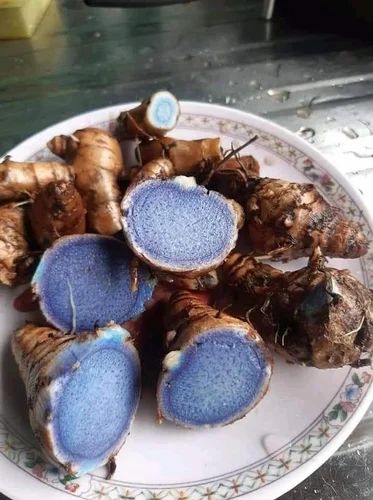
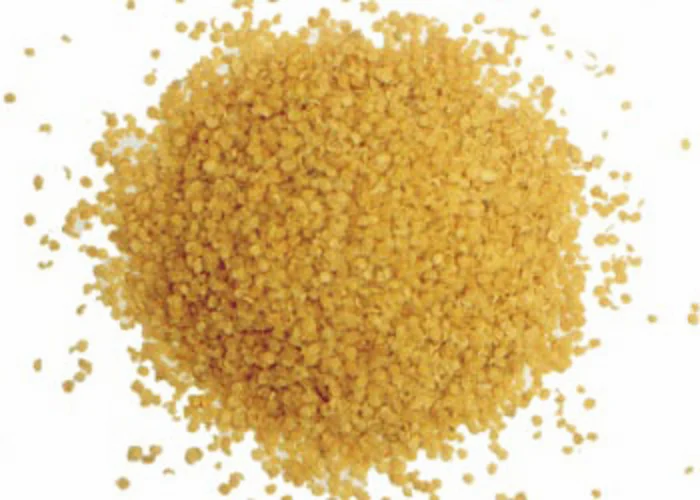
Black Turmeric widely varies in size, shape, and coloring, depending on cultivation conditions. The plant is typically comprised of a main underground rhizome, also known as the mother, and smaller rhizomes that branch off from the mother, averaging 2 to 5 centimeters in length. Black Turmeric rhizomes have an ovoid, knobby appearance with tapered to blunt ends, and the surface is often covered in scars, root hairs, rings, and nodes. The rhizome's skin is also dark brown, tan, to light beige with a tough, rough, and corky feel. Underneath the surface, the rhizome's flesh is dense, fibrous, and moist, with a chewy nature. The flesh is most notable for its coloring, appearing in shades of dark blue, light blue, cobalt blue, to blue-green. The flesh may also showcase concentric circles and be lighter in some parts while darker and more saturated in other spots. Black Turmeric releases a pungent, camphor-like aroma with mildly spicy and bitter undertones. The rhizomes are not commonly consumed on their own due to their hot, sharp, sour, and earthy taste, and they sometimes carry a subtle turpentine-like flavor mixed with bitterness. In addition to the rhizomes, upright stems and lanceolate to oblong-shaped leaves extend almost one meter in height above ground. The bright green leaves bear a characteristic red-black stripe down the center. The rhizome of kali haldi has a bitter, sharp, hot taste, and a pleasant odour. It has anti-bacterial and anti-fungal properties, and is laxative. It is used as a tonic for the brain and the heart. Rhizomes are useful in treating leucoderma, piles, bronchitis, asthma, tumors, and tuberculous glands of the neck, enlargement of the spleen, epileptic seizures, inflammations, and allergic eruptions. Black turmeric is native to Northeastern and Central India where it has been part of cultural ceremonies and medicinal remedies. Black turmeric is used by many tribal communities in the state of Madhya Pradesh, Maharashtra. The herb is sold fresh or dried in markets across India and Southeast Asia. As of 2016, Black turmeric has been listed as an endangered species by the Indian Agricultural Department. Efforts are being made to protect and conserve Black turmeric in Odisha, on the central eastern coast, along the Bay of Bengal. NUTRITIONAL VALUE/ MEDICINAL USE Black turmeric contains the highest concentrations of curcumin of any plant species. It is a powerful antioxidant and anti-inflammatory. The root has been used medicinally for centuries to treat arthritis, asthma, and epilepsy. Black turmeric root is crushed and can be applied to bruises and sprains to ease discomfort or applied to the forehead to help relieve symptoms of migraines. The rhizome of the plant is aromatic, contains essential oil and used for a variety of purposes. The characteristic pungent smell of the rhizome is due to the presence of essential oil rich in camphor and starch. The rhizome is traditionally used in the treatment of hemorrhoids, leprosy, asthma, cancer, fever, wounds, vomiting, menstrual disorder, anthelmentic, aphrodisiac, gonorrheal discharges and inflammation. Furthermore, the smooth muscle relaxant, anti-tumour and anti-oxidant properties of Curcuma Caesia rhizome extract had been reported. Dried rhizomes of Curcuma caesia are reported to contain 1.6% essential oil containing 76.6% d-camphor; 8.2% camphene and bornylene; and 10.5% sesquiterpenes, curcumine, ionone, and turmerone. Plant height: 14 - 29 inches Plant spread: 5 - 9 inches Common name(s): Kali haldi, Krishna kedar, Black Turmeric Flower colours: White Max reachable height: 1.5 to 3 feet Difficulty to grow: Easy to grow Special features: Foliage & Rhizome About the Company GST Registration Date: Jun 2020 Legal Status of Firm: Proprietorship Number of Employees: 26 To 50 People Annual Turnover: 5 - 25 Cr company-description: Established in year 2010, Amatya Group the leadingProducts and Services Provider of Certification Services, Licenses Services and many more.