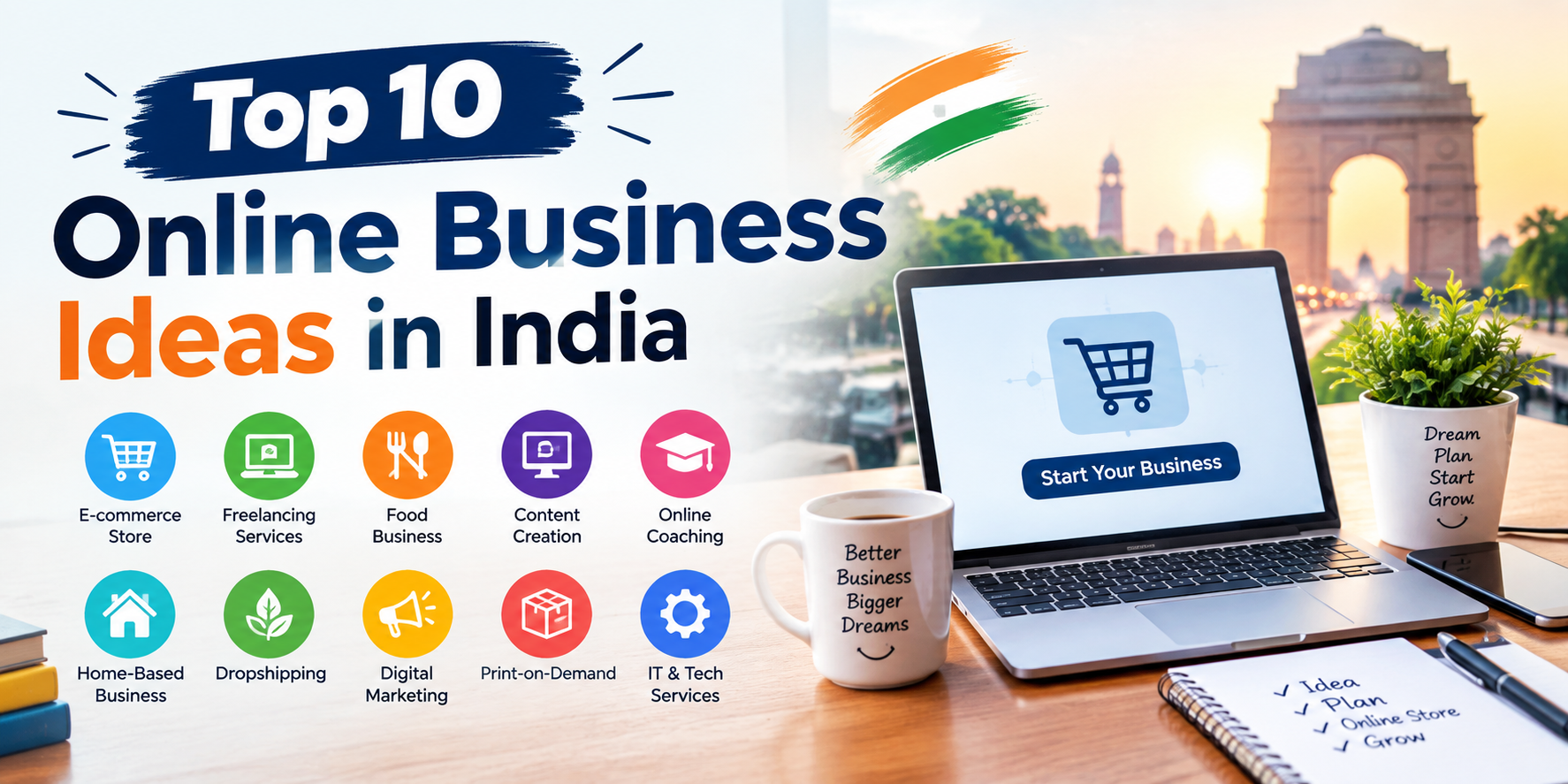
Starting a small business can help you become self-employed, add an income stream or turn a skill or idea into a full-time career. India offers opportunities across manufacturing, retail, services, food, e-commerce, technology, and many other sectors.
However, starting a business requires more than having a good idea. You need to understand your customers, study competitors, prepare a business plan, choose the right business structure, manage your finances, and find effective ways to reach customers.
If you are wondering how to start a small business in India, this guide explains the process step by step. It covers business ideas, registration, funding, marketing, and practical tips for growing your business.
Step-by-Step Guide to Starting a Small Business in India
Here is the step-by-step guide to starting a small business in India:
Step 1: Choose a Small Business Idea that Matches Your Skills
First, choose a business idea that matches your skills, experience, interests, and budget. Many business ideas suit beginners, but not every idea works for everyone. Before choosing one, you need to ask yourself:
-
What skills do I have?
-
What products or services do I understand?
-
How much money can I invest?
-
Do I want to work from home or have a physical location?
-
Who will buy my products?
-
Is there demand for my product or service?
-
Can the business grow in the future?
For example, if you love cooking and you are skilled in it, you can consider a home-based food business. Or if you have digital skills, you can explore web design, content writing, social media management, or other online business ideas. Here are some of the popular, profitable business ideas that you can explore:
-
Online retail
-
Food and catering services
-
Clothing and fashion
-
Digital marketing services
-
Handmade products
-
Beauty and personal care
-
Tuition and coaching
-
Repair and maintenance services
-
Wholesale and distribution
-
Customized products
Step 2: Research Your Markets and Competitors
Once you have a business idea, research the market for your product or service before investing money. Market research helps you understand potential customers and what competitors already offer. While researching, you need to find out:
-
Who are your target customers?
-
What products or services do they currently buy?
-
What are they willing to pay?
-
Who are your main competitors?
-
What do customers like or dislike about existing businesses?
-
What can you offer differently?
You can research competitors through their websites, social media pages, online marketplaces, customer reviews, and local stores. For example, if you want to start a bakery, visit competing bakeries and compare their products, prices, packaging, customer service, and online presence. This research can help you identify market gaps and develop a stronger business proposition.
Step 3: Create a Small Business Plan
Right after completing the competitor analysis, you need to create a small business plan for your idea. A small business plan gives you a roadmap for starting and managing your business. You do not need to create a complicated document. A simple plan can include:
-
Business name and concept
-
Product or services
-
Target customers
-
Market and competitor analysis
-
Pricing strategy
-
Startup costs
-
Monthly expenses
-
Expected sales
-
Revenue goals
-
Funding requirements
-
Growth plans
Your plan should also explain how the business will make money. For example, if you are selling hand-made products online, calculate the cost of raw materials, packaging and shipping, website expenses, advertising, and other costs before deciding your selling price. A well-prepared plan can help you understand how much money you need and what you need to achieve to make the business sustainable.
Step 4: Choose the Right Business Structure
Choosing the right legal structure is another important part of how to start a small business in India. Depending on your business and ownership, you may consider structures such as:
Sole Proprietorship
Sole proprietorships are commonly used by individuals running small businesses. It is relatively simple to operate and can suit many small or home-based businesses.
Partnership
A partnership may suit two or more people who want to run a business together.
Private Limited Company
A private limited company may suit businesses planning to grow, raise investment, or have multiple shareholders. The right structure depends on factors such as the number of owners, liability and taxation, compliance requirements, and future plans.
Step 5: Register Your Small Business in India
After choosing your business structure, complete the applicable registration and legal formalities. Business registration in India can vary depending on the type of business, location, activities, and business structure. Depending on your situation, you may need:
-
Business or entity registration
-
PAN and TAN, where applicable
-
GST registration, where applicable
-
Udyam registration for eligible MSMEs
-
Shop and Establishment registration, where applicable
-
Local trade licenses or permissions
-
FSSAI registration or license for eligible food businesses
-
Other industry-specific licenses
Also check the latest requirements for your business before starting operations. A professional such as a chartered accountant, company secretary, or business consultant can also help with the process.
Step 6: Open a Business Bank Account and Manage Finances
Keeping business and personal finances separate makes financial management much easier. Once your business is established, consider opening an appropriate current account or business banking facility. You need to keep records of:
-
Sales
-
Purchases
-
Business expenses
-
Invoices
-
Taxes
-
Employee payments
-
Loans
-
Other financial transactions
Use accounting software or other bookkeeping services if necessary. Also create a monthly budget. Knowing where your money comes from and where it goes can help you control costs and make better business decisions.
Step 7: Arrange Funding for Your Small Business
Not every small business requires a large investment. However, you may need funds for inventory, equipment, rent, marketing, employees, technology, or other expenses. Some possible sources of small business funding include:
-
Personal savings
-
Family and friends
-
Business loans
-
Bank loans
-
Government-supported schemes
-
NBFC financing
-
Angel investors for suitable startups
-
Supplier credit
Before taking a loan, calculate how much you actually need and whether the business can comfortably manage the repayment. For a new entrepreneur, starting small and controlling expenses can reduce financial pressure.
Step 8: Build Your Brand Identity
A strong brand can help customers remember your business and distinguish it from competitors. Your brand identity may include:
-
Business name
-
Logo
-
Colours
-
Packaging
-
Website design
-
Brand message
-
Product presentation
-
Customer communication
Your branding should match your target audience. For example, a premium jewelry brand may use a different visual identity from a budget clothing store. You do not need an expansive branding package when you are starting. Focus on creating a professional, consistent identity across your website, social media pages, packaging, and other customer touchpoints.
Step 9: Create an Online Presence
Having an online presence is increasingly important for small businesses. Depending on your business, you can create:
-
A business website
-
Google Business Profile
-
Instagram page
-
Facebook page
-
Linkedin page
-
WhatsApp Business account
-
E-commerce store
-
Marketplace seller account
A website can provide information about your products, services, prices, location, contact details, and ordering process. For businesses that sell products, an online store can help you reach customers beyond the local market. If you are wondering how to start a small business at home, building an online presence can be especially useful. It allows you to promote your business without immediately spending money on a physical storefront.
Step 10: Find Customers and Start Selling
Once your business is ready, focus on finding your first customers. You can use both offline and online methods.
Offline Marketing
Depending on your business, you can use:
-
Local networking
-
Referrals
-
Business cards
-
Local events
-
Exhibitions
-
Direct sales
-
Partnership with other businesses
Online Marketing
Digital marketing for small businesses can include:
-
Social media marketing
-
Search engine optimization
-
Google advertising
-
Email marketing
-
Content marketing
-
Influencer marketing
-
WhatsApp marketing
Start by choosing channels where your target customers are most active. For example, a local salon may benefit from Google Business Profile and Instagram, while a B2B manufacturer may get better results through LinkedIn, search engines, and B2B platforms.
Step 11: Use B2B Portals to Grow Your Small Business
B2B portals can help small businesses connect with buyers, wholesalers, distributors, retailers, and other companies. Instead of depending only on individual consumers, a business can use B2B platforms to showcase its products and generate business inquiries.
For example, a manufacturer or supplier can create a business profile, upload product information, mention its location and capabilities, and respond to buyer inquiries. B2B portals can be particularly useful for businesses involved in:
-
Manufacturing
-
Wholesale
-
Export
-
Distribution
-
Industrial products
-
Handicrafts
-
Agricultural products
For small businesses, these platforms can add another sales channel and help connect with buyers across India and international markets.
Small Business Ideas in India
India has opportunities across many sectors. The best idea for your small business will depend on your skills, location, budget, and customer demand. Here are some of the best small business ideas:
-
Clothing and apparel business
-
Food and catering business
-
Bakery
-
Handmade products
-
Beauty and salon services
-
Digital marketing agency
-
Graphic design services
-
Tuition and coaching
-
Mobile computer repair
-
Home cleaning services
-
Packaging products
-
Wholesale trading
-
Online retail
-
Photography services
-
Fitness and wellness services
-
Customized gift business
What Are Some Low-Investment, Slow-Start Business Ideas?
If you have limited capital, consider businesses that don't require expensive equipment, large premises or significant inventory. Here are some of the low-investment business ideas for you:
-
Freelancing
-
Content writing
-
Social media management
-
Graphic design
-
Online tutoring
-
Home-based food services
-
Customized gifts
-
Print-on-demand products
-
Reselling
-
Digital products
-
Photography
-
Event-related services
-
Online consulting
Some of these businesses can be started from home, reducing rent and infrastructure costs.
Small Business Ideas for Women
Women entrepreneurs can choose home-based or commercial business models based on their skills and resources. Some options include:
-
Home bakery
-
Catering
-
Boutique
-
Handmade jewellery
-
Clothing business
-
Beauty services
-
Online tutoring
-
Content creation
-
Digital marketing
-
Freelancing
-
Customized gifts
-
Handicrafts
-
Home décor products
Small Business Ideas for Students and Beginners
Students and first-time entrepreneurs can consider businesses that require little capital and offer flexible hours. Some options include:
-
Freelancing
-
Social media management
-
Graphic design
-
Video editing
-
Online tutoring
-
Content writing
-
Reselling
-
Affiliate marketing
-
Print-on-demand
-
Photography
-
Digital products
The goal shouldn't be only to find a business that requires little money. It is also important to develop useful skills and understand how to find and retain customers.
Common Challenges Small Businesses Face
Starting a small business can be rewarding, but entrepreneurs also face several challenges. Here are some of the most common challenges:
-
Limited Capital: Limited funds can make it hard to buy inventory, hire employees, or invest in marketing.
-
Finding Customers: Getting your first customers is often one of a new business's biggest challenges.
-
Strong Competition: Established businesses may already have loyal customers and stronger brand recognition.
-
Cash Flow Problems: A business can generate sales but still face cash-flow problems if customers delay payments or expenses increase.
-
Managing Everything Yourself: Small business owners often handle sales, marketing, accounting, customer service, and operations at the same time.
-
Changing Customer Preferences: Businesses need to understand changing customer needs and adapt their products or services accordingly.
Tips to Grow a Small Business Successfully
Growing a small business takes patience and consistent effort. Here are some practical tips:
-
Focus on Customer Satisfaction: Happy customers are more likely to return and recommend your business.
-
Track Your Business Numbers: Monitor sales, expenses, profit margins, cash flow, and customer acquisition costs.
-
Build an Online Presence: Use your website, social media, marketplaces, and other digital channels to reach new customers.
-
Invest in Marketing Carefully: Test different marketing methods and measure which ones generate actual inquiries and sales.
-
Improve Your Products: Use customer feedback to improve quality, packaging, pricing, and service.
-
Build Business Relationships: Connect with suppliers, distributors, retailers, manufacturers, and other businesses.
-
Expand Gradually: Do not expand too quickly. First, understand what works, then invest more in successful products and channels.
Conclusion
Learning how to start a small business in India becomes easier when you approach the process step by step. Start with a business idea that matches your skills and resources, research the market, create a practical plan, choose the right business structure, complete the required registrations, and manage your finances carefully.
You do not always need a large investment to get started. Many businesses can begin from home or online and expand gradually as sales increase. The key is to solve a real customer problem, provide good products or services, control your costs, and build strong customer relationships. With proper planning and consistent small-business marketing, a small idea can grow into a sustainable business over time.