Description
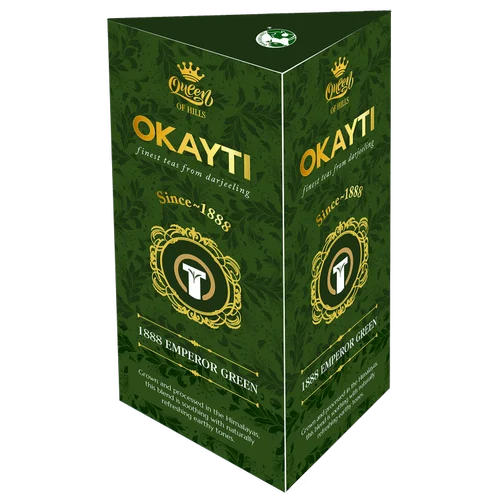
1888 Emperor Green is minimally processed green tea packed with healthy elements. The choicest of leaves from the high elevation section of Okayti are carefully plucked and taken to the factory. Oxidation is arrested by steaming the leaves, it is then slightly rolled and dried. Since it is not oxidised, it is packed with natural elements such as polyphenols and antioxidants that help the body detoxify. It has a peculiar aftertaste of cut grass with overwhelming green flavours.Pack of 100 Gm - Rs.330Pack of 200 Gm - Rs. 620Darjeeling Tea, Green Tea, organic tea About the Company GST Registration Date: Jul 2017 Legal Status of Firm: Limited Company Number of Employees: 501 To 1000 People Annual Turnover: 5 - 25 Cr company-description: Tea growers might have dropped their jaws when they set their eyes on Darjeeling in general and Rangdoo in particular, for they had found heaven, which would nurture a new entity in the world of tea.William Llyod bought Rangdoo from the locals in 1872. Undulating terrain with mountains formed in wavelike structures ranging from 3900 to 6200 feet above sea level, Rangdoo was a paradise for passionate tea growers. Unlike the harsh temperature of Assam and Terai, it had a temperate climate, cool breeze and abundant monsoon to substantially support the production of fine quality tea. ProductionThe core part of the name Okayti is certainly its tea, and the several steps involved in the processing is followed meticulously for a coherent flavour. !-- @page { margin: 2cm } p { margin-bottom: 0.25cm; line-height: 120% } a:link { so-language: zxx } -- The only "okay" teaThe story of Okayti is a story of an enduring search for Home. The mountainous region of Darjeeling was scarcely populated before tea plantations started. After acquiring, the British saw a second home in Darjeeling, far away from the sweltering climate of then Calcutta. After several expeditions, tea was sowed in Darjeeling. The British as well as hundreds of the dispossessed people found their homes. 150 years old plantation Rangdoo as it was erstwhile known is one of the most picturesque estates in darjeeling. In the past 150 years, things have barely changed. The home of the first owner still stands proudly within the estate's vicinity flaunting its victorian beauty. The planters and the people who put their sweat and blood accepted rangdoo as their home. Now, when we glance upon the estate, it looks like the tea bushes are an inherent part of the region, every single fauna right where it is supposed to be. But the history entails the enormous amount of effort that was put to make okayti what it is today. The historical era of the 1870s The decade 1870s marked the time when this tea garden from darjeeling was established. Okayti tea estate is also credited to have one of the oldest tea factories in the region dating back to 1888. The decade also marks the huge shift in the socio-economy and geography of darjeeling. Swirly life, twisty roads To get a panoramic view, one has to navigate the okayti tea estate through roads so twisty that one may assume that they are going in circles. A walk in the swirly pathways amidst the tea bushes, trees and lots of green is therapeutic. Perhaps the paths are a metaphor of how persistence and patience leads one to the top and how there are no shortcuts to better things. Directly from garden to cup Okayti harvests and processes its tea within the estate producing the finest single estate darjeeling teas. To enhance the flavours, only bio-organic supplements are used. The raw leaves are taken to the factory fresh where it is processed with utmost care. And the fresh ready to brew teas are shipped directly to your cup, a huge cut in unnecessary travel to whole sellers and retailers makes sure that the tea reaches you as brisk as it was in the factory.